

Recipe Overview
Why you’ll love it: Bake a loaf of fresh crusty bread to serve with dinner tonight. This traditional Irish soda bread recipe is so good and it’s easy to make. This recipe is a quick bread made without yeast which means it doesn’t need time to rise.
How long it takes: just over an hour
Equipment you’ll need: large bowl, baking sheet
Servings: makes one large round loaf
Here in the United States, we love to celebrate St. Patrick’s Day. It doesn’t matter if you have Irish ancestors or not; it’s a good opportunity to “put on the green” and celebrate a little bit. As with any good celebration, lots of delicious eating and drinking is essential (be sure to check out my list of St. Patrick’s Day recipes). Today, I’m bringing you a recipe for Irish soda bread which is often associated with St. Patrick’s Day.
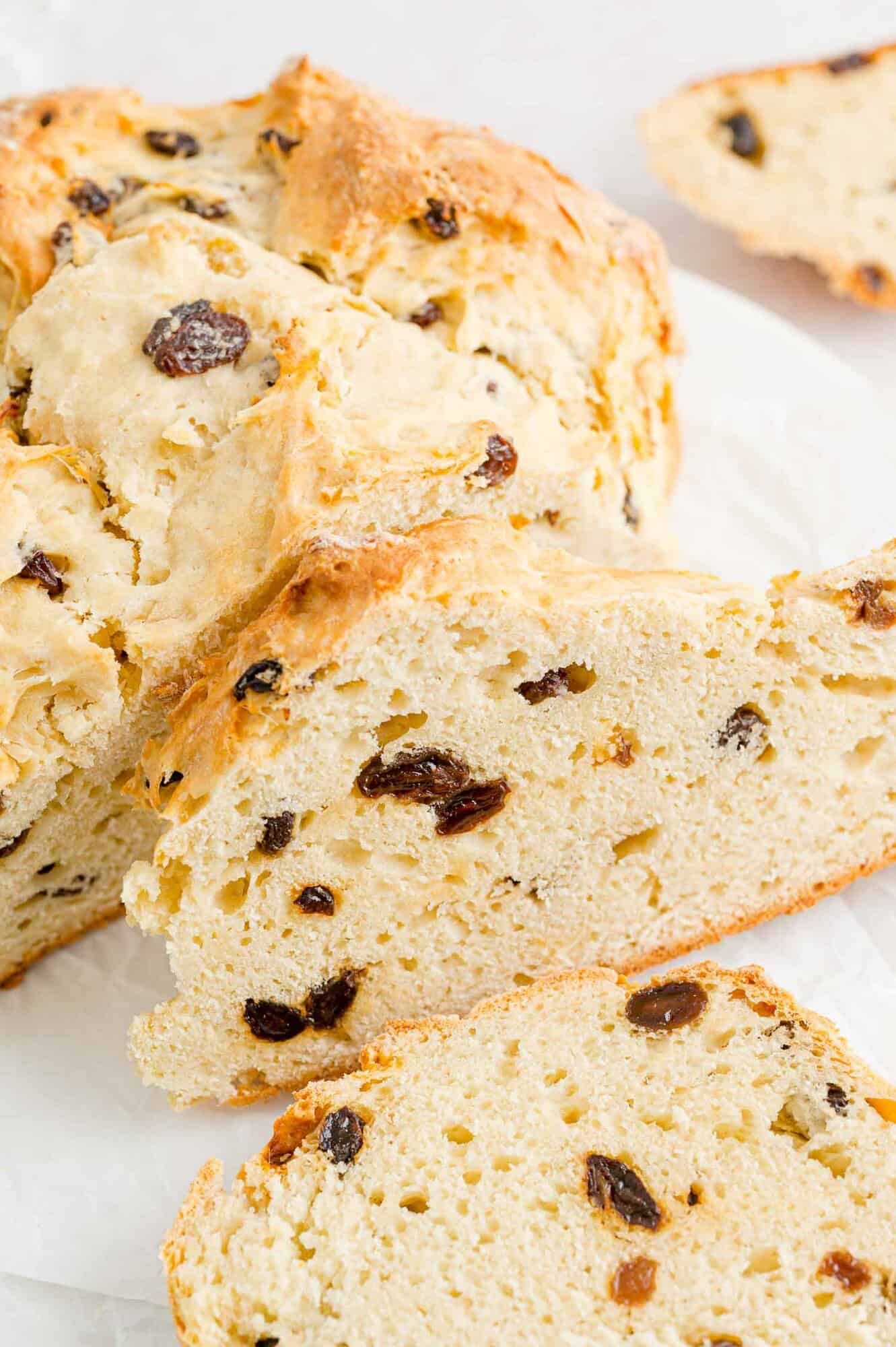
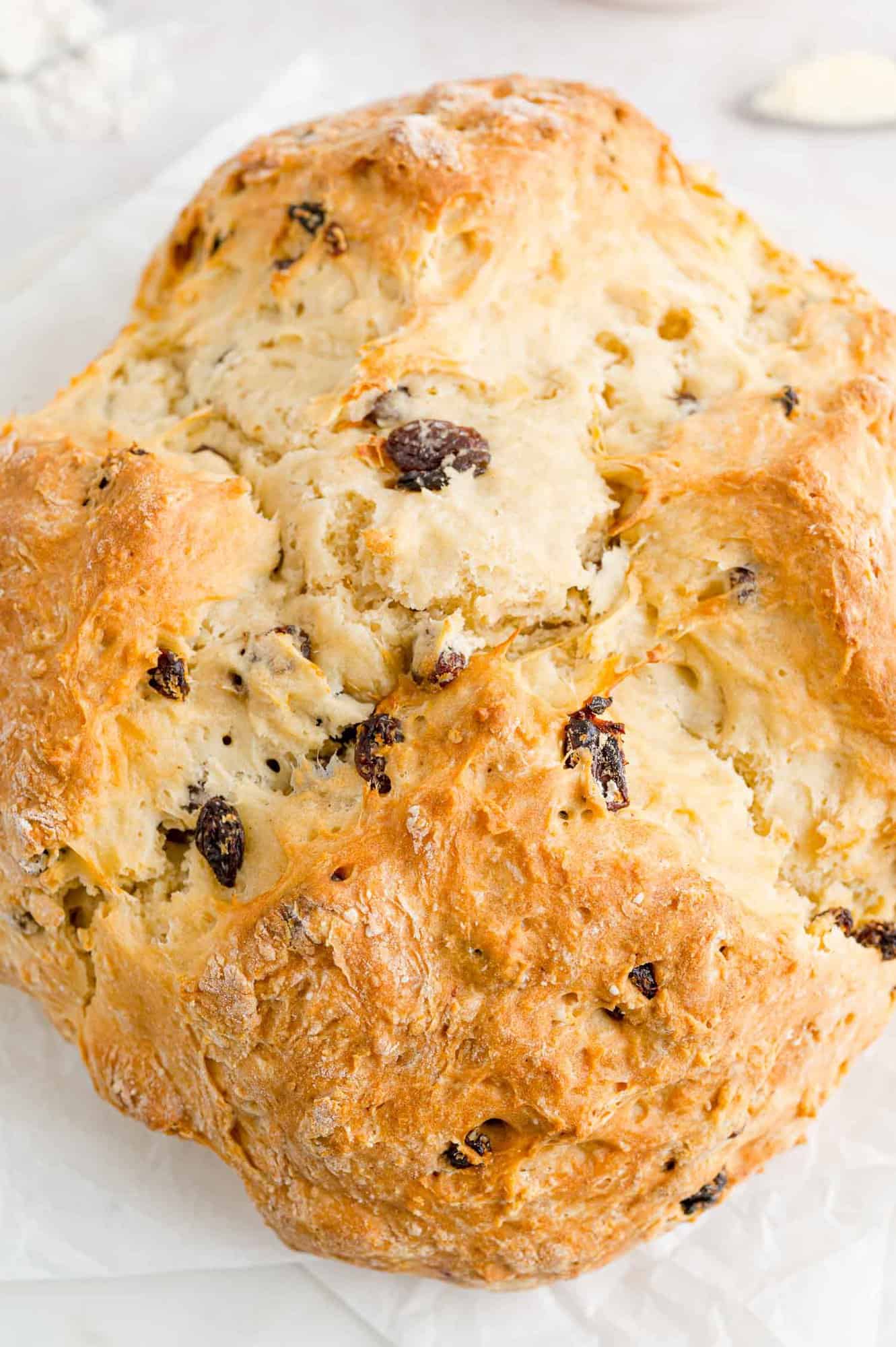
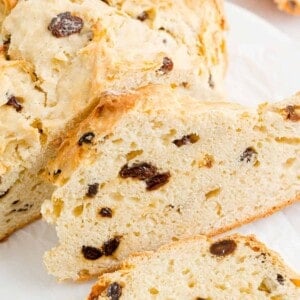
Isn’t this bread beautiful? Warm and crusty, studded with raisins, and slathered with butter, Irish soda bread is welcome any time of the year! It’s moist, rich and buttery, lightly sweetened but not so much that you wouldn’t want to drizzle honey or spread your favorite jam on it.
Easy Irish Soda Bread
It’s a quick bread. Irish soda bread is made without yeast, so it’s easy to bake your own loaf from scratch even if you’re a beginner baker. You don’t have to fuss with yeast, kneading dough, or rising times. The process is similar to beer bread, if you happen to be familiar with that.
Ready to eat in 1 hour. Stir the dough together, shape the loaf, and pop it in the oven. How long does it take? From start to finish, it won’t take you much more than an hour, and that includes 40 minutes of baking time.
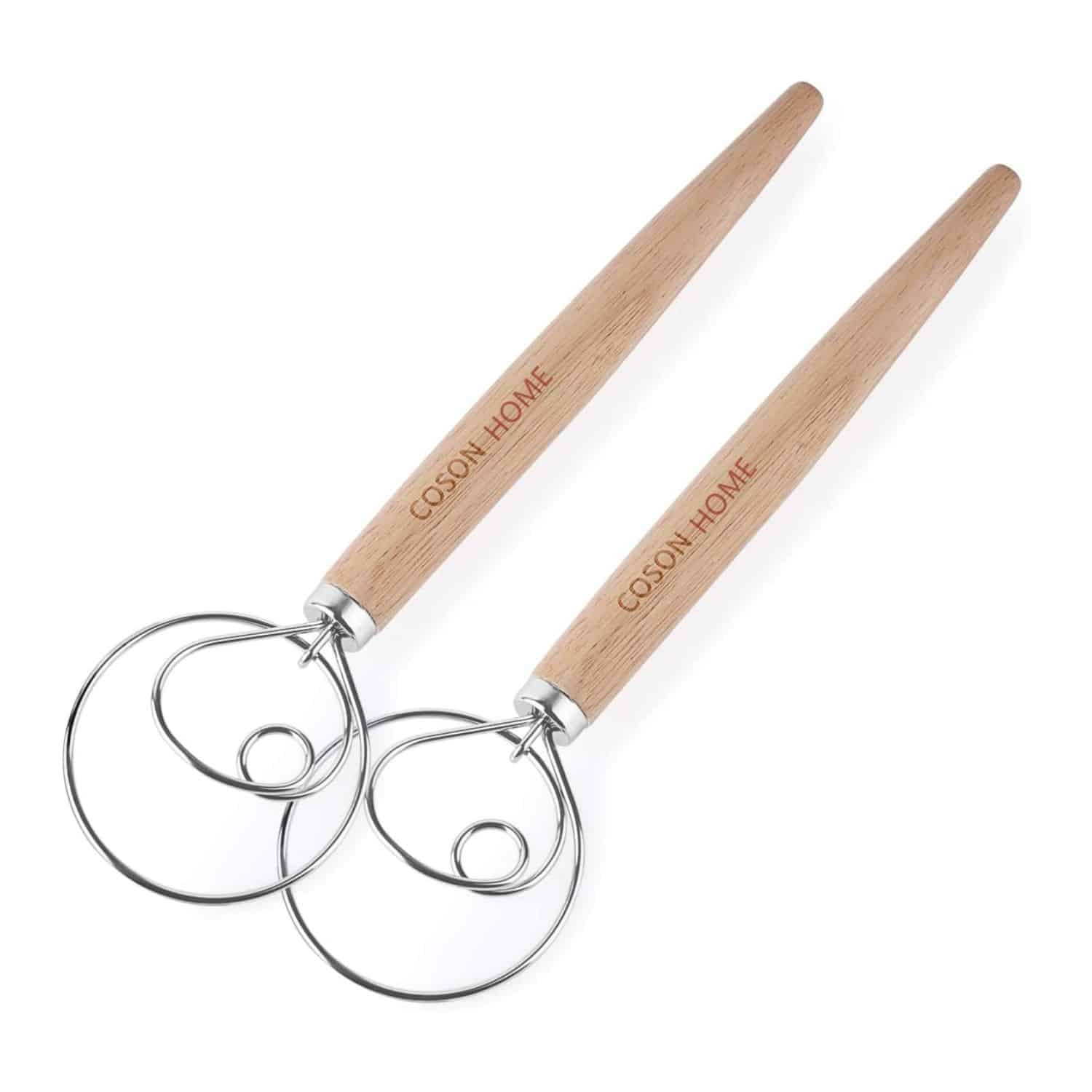
No fancy equipment needed. You won’t need any specialized kitchenware, just a large mixing bowl and a baking sheet. A dough whisk is helpful but not essential.
“I enjoyed making your Irish soda bread, it was delicious! I also put the raisins in mine. Thank you, will make it again.”
Ingredient Notes
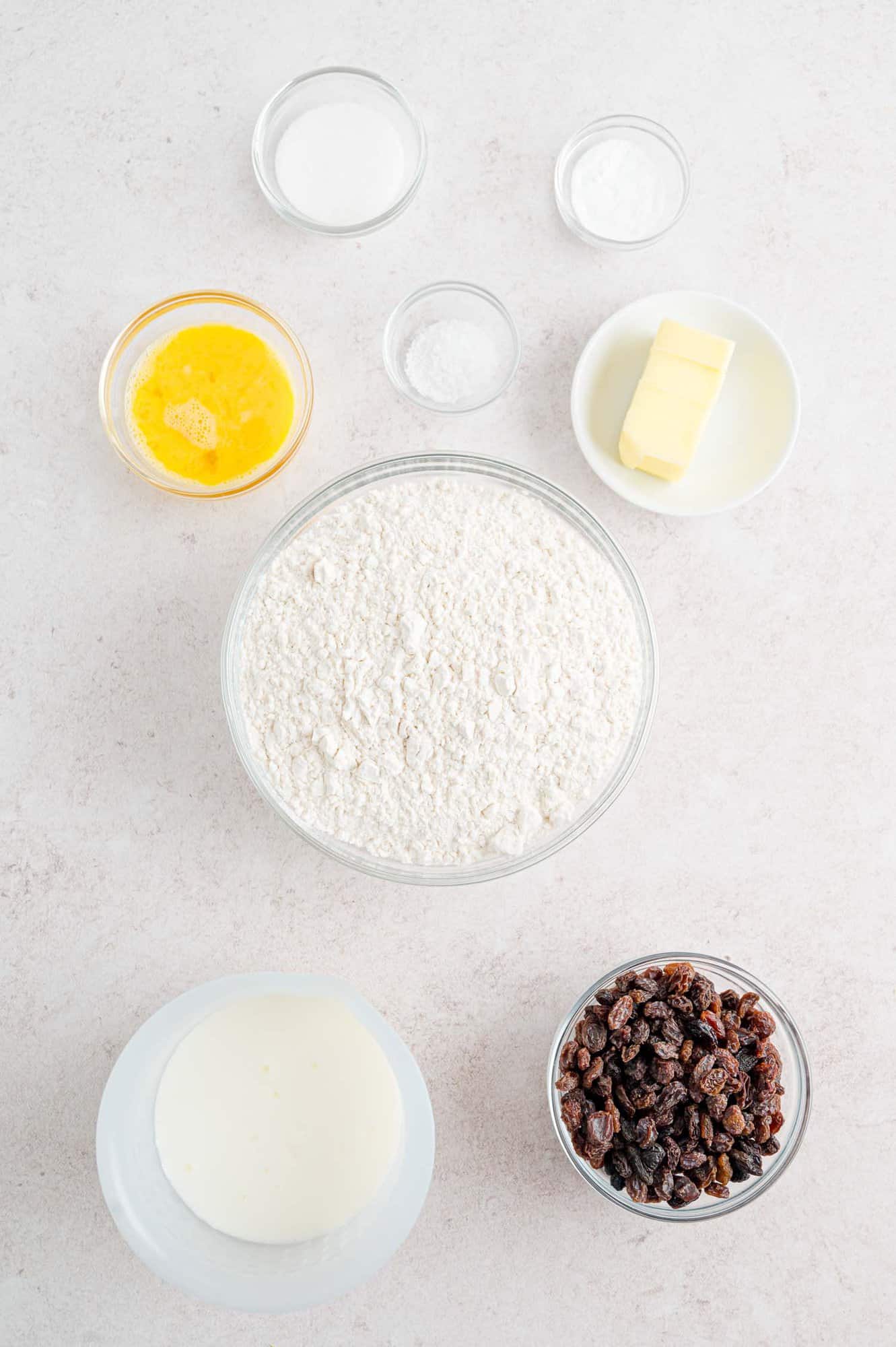
- All-Purpose Flour: You won’t need to buy special bread flour for this bread, just use regular white flour. I always buy unbleached flour so that’s what this recipe was tested with.
- Egg: One egg adds richness and nutrition to this simple bread, and also enhances the texture.
- Buttermilk & Butter: Buttermilk contains an abundant amount of lactic acid, which interacts with the baking soda. This interaction is what leavens the bread, that is, makes it rise. Buttermilk has a rich flavor even though it is usually low fat; unsalted butter adds even more buttery flavor.
- Baking Soda, Sugar, Salt: Baking soda is essential to the success of this recipe. The bread is lightly sweetened with granulated sugar (just 2 tablespoons), and you’ll also need salt.
- Raisins: Irish soda bread usually contains either raisins or currants, which are much smaller than raisins. Either choice is fine. If your raisins are a bit old and super dried out, soak them for ten minutes or so in hot water to plump them up while you prep the bread. Drain the raisins well before adding them to the dough.
Dough Whisk
There’s really no good substitute for a sturdy, long-handled dough whisk. The heavy-duty whisk enables you to stir sticky bread dough and other stiff doughs. The whisk is nonstick so the dough doesn’t cling to the metal, making cleanup easier, too.
How To Make Irish Soda Bread
Preheat the oven. It’s important that the oven is preheated when the bread is ready to bake. You’ll need a large mixing bowl, a dry measuring cup, and a liquid measuring cup; the bread is baked on a baking sheet lined with parchment paper.
Mix dry ingredients. Measure the flour into the mixing bowl. You’ll need four cups, plus a little extra when you shape the loaf. Add the sugar, salt, and baking soda to the flour and whisk the dry ingredients together.
Measuring Flour Correctly
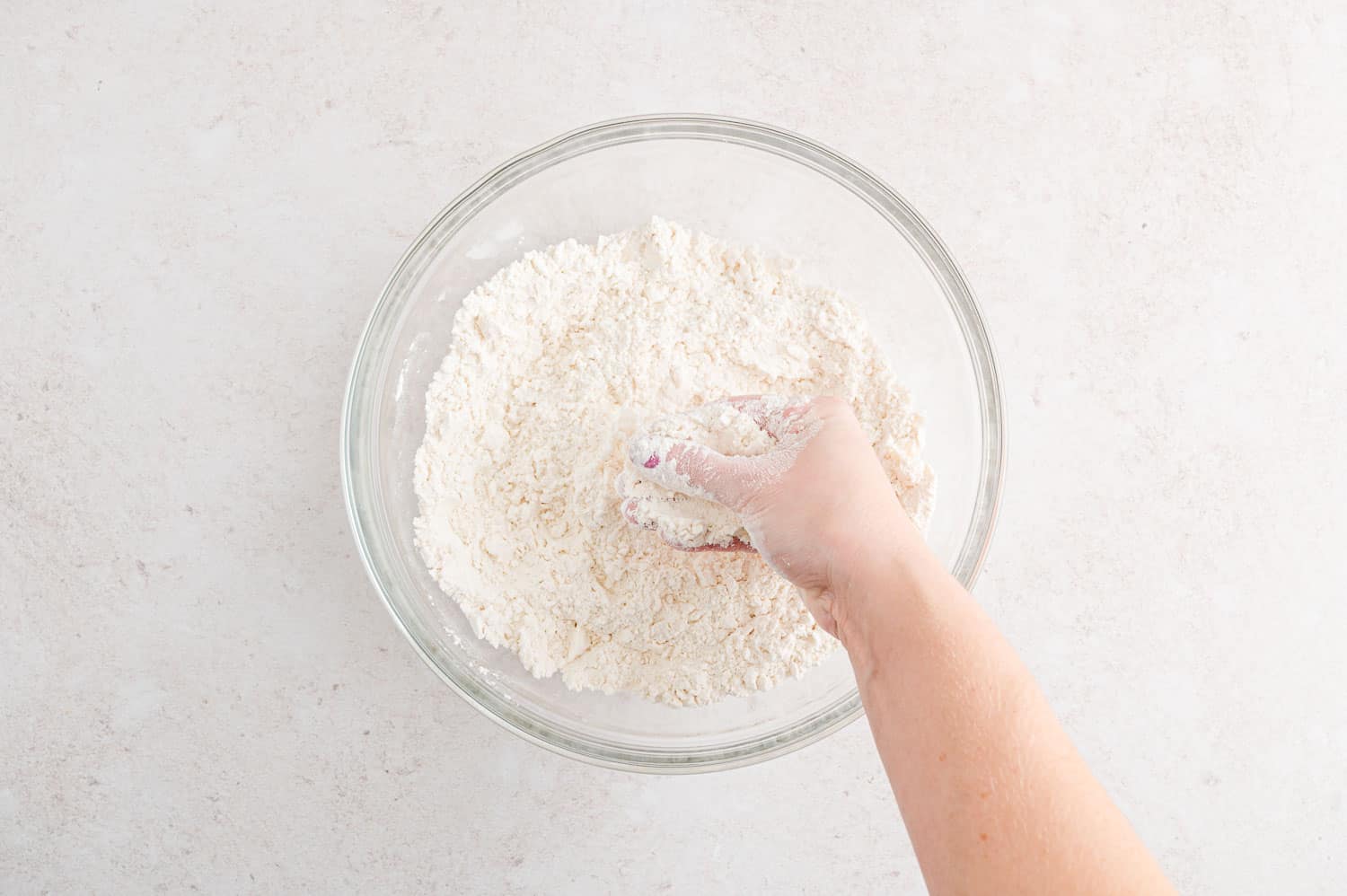
Always lightly spoon the flour from the storage container into a dry measuring cup. If you use the measuring cup to scoop, the flour is compacted. Another common mistake is to level the flour by shaking it down which also causes the flour to compact. Instead, level the flour with a straight edge such as a table knife. Compacted flour means too much flour is added to your recipe resulting in dry or hard baked goods.Add butter. Next, work the softened butter into the dry ingredients. I’ve found the best way to do that is to knead it in with your fingers. You could also use a pastry blender or a sturdy fork to cut in the butter. Incorporate the butter completely; the mixture will look like coarse crumbs. There should not be any large lumps of butter.
Add raisins. Mix in the raisins, if using. Coating them with the dry flour mixture will keep them from sinking to the bottom of the loaf.
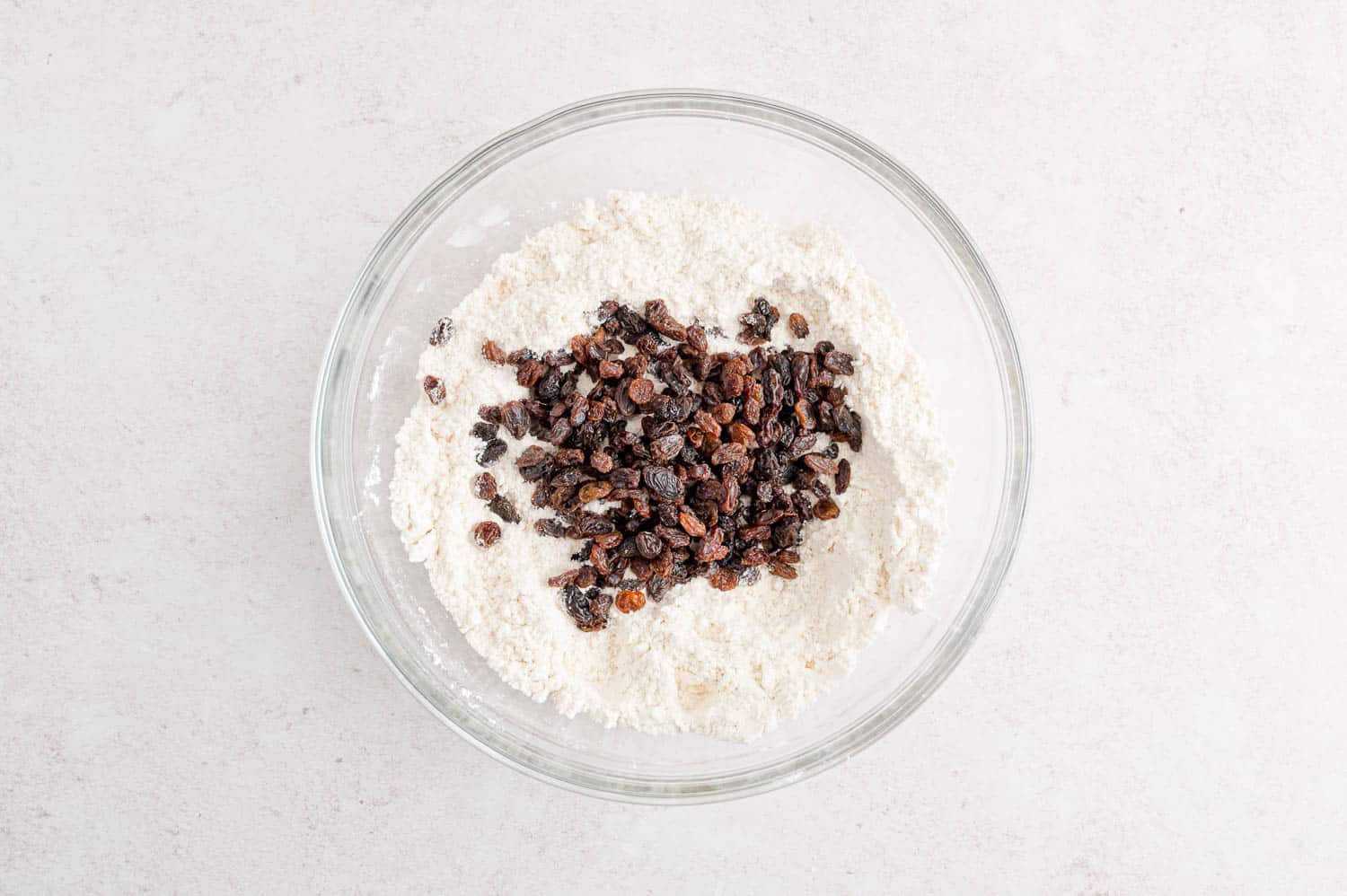
Add egg and buttermilk. Whisk the egg lightly so that the yolk and white are mixed together. Add the egg to the bowl, along with the buttermilk.
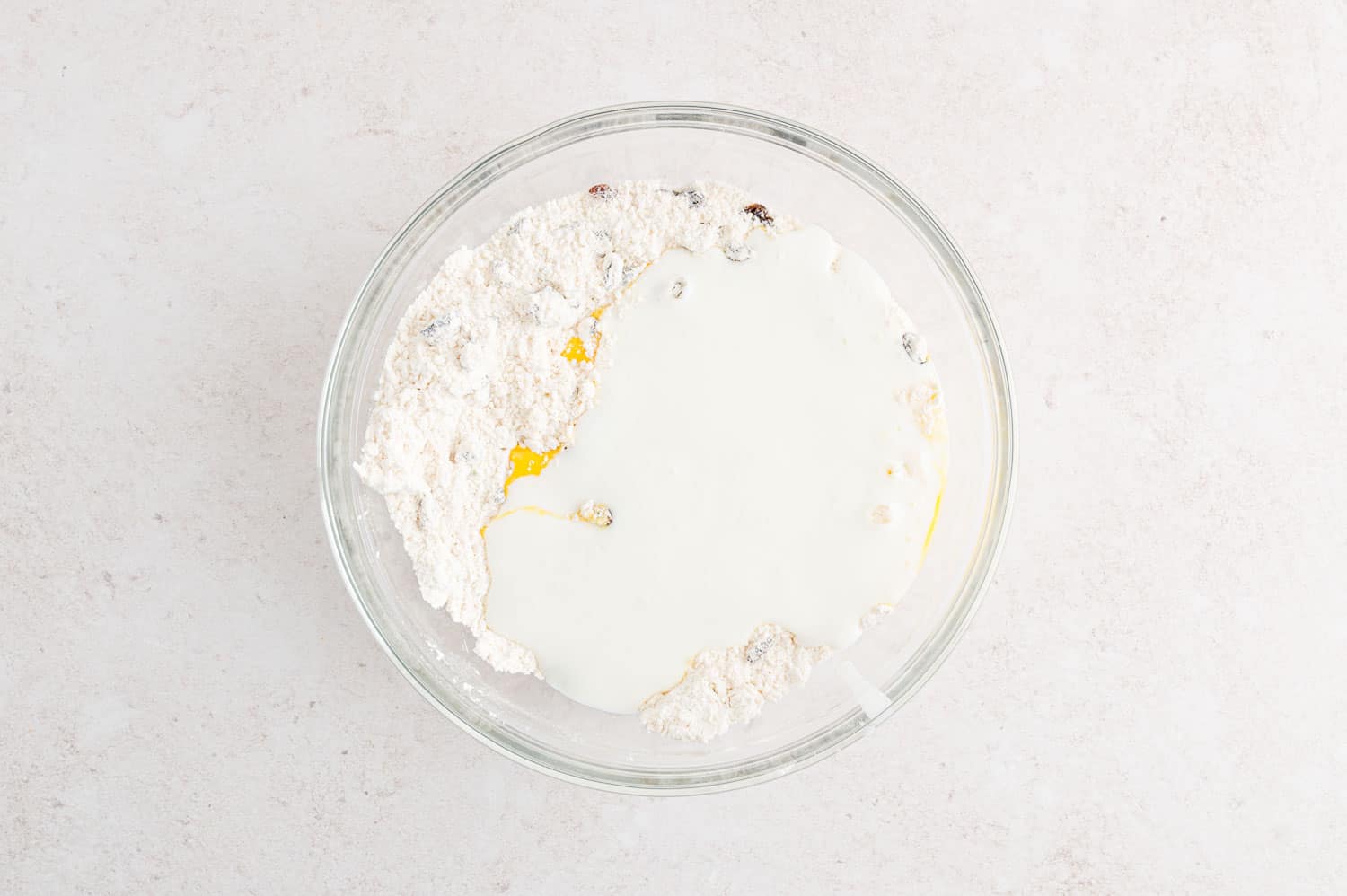
Combine. Stir, using a heavy wooden spoon or a dough whisk.
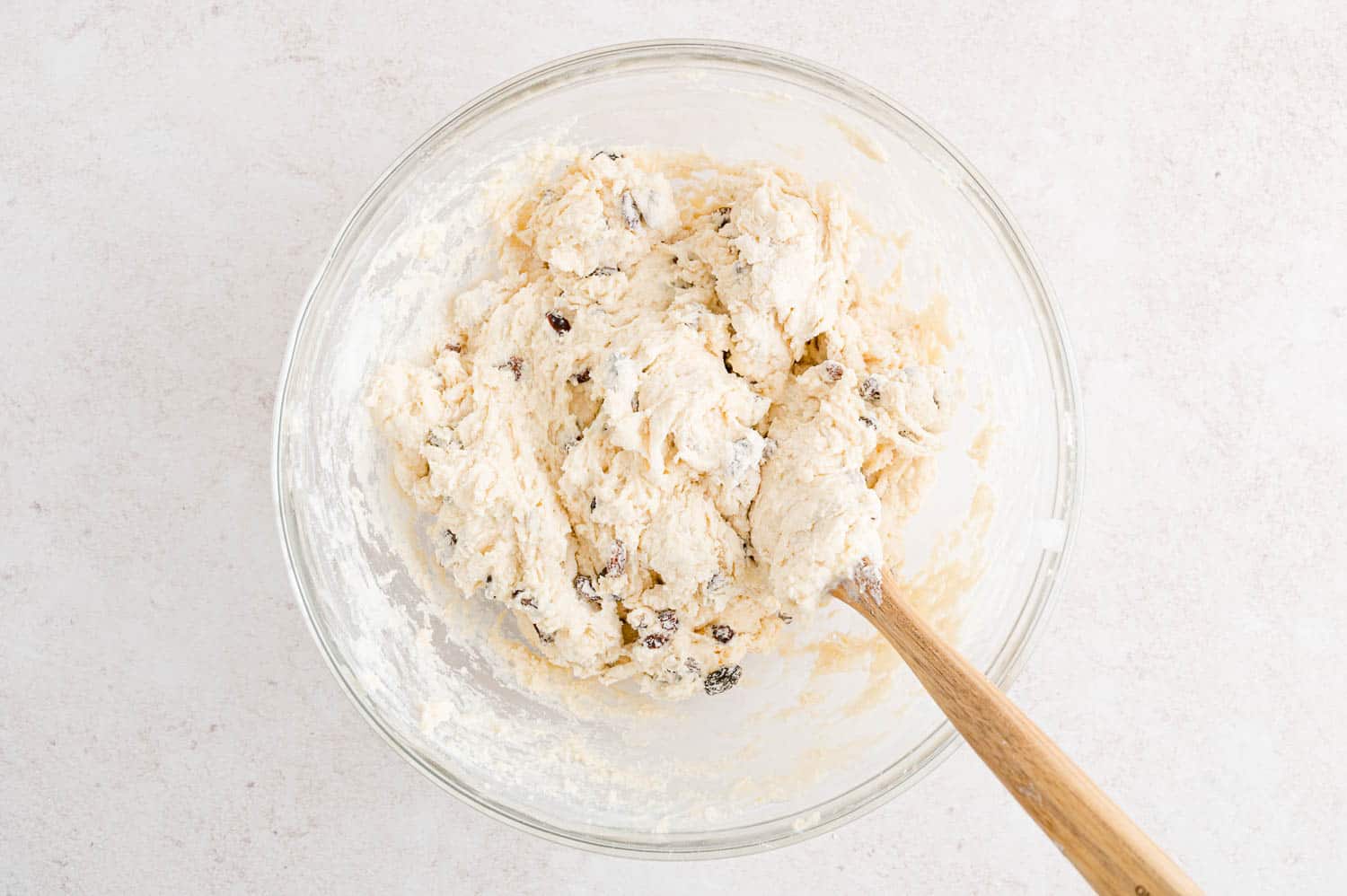
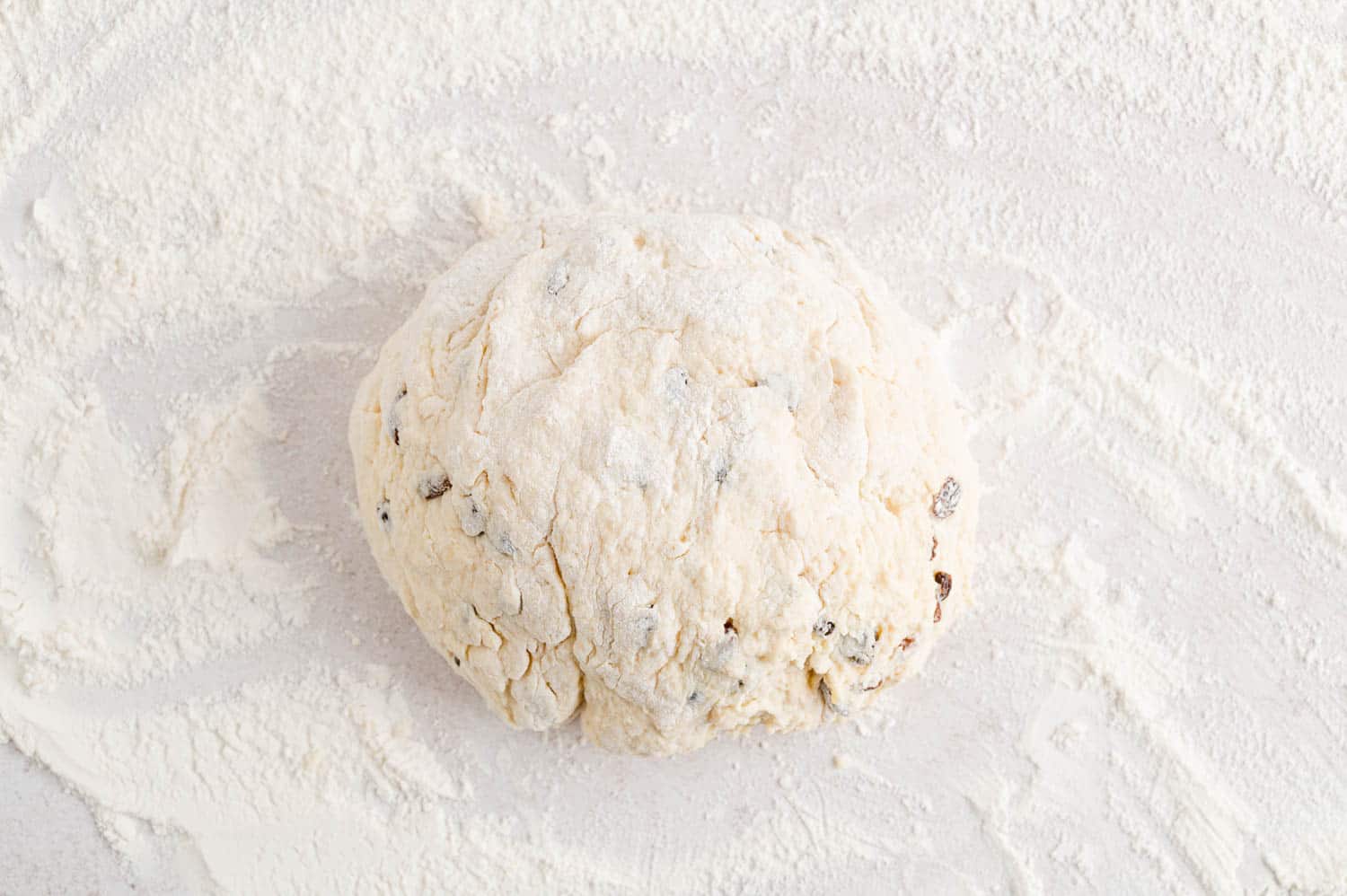
Shape the dough. The dough will be very thick, sticky and shaggy. When it becomes impossible to stir any longer, scrape it out of the bowl onto a floured surface. Sprinkle the top with flour so you can handle it.
Lightly knead the dough until you can shape it into a ball. You don’t want to overwork the dough. Only knead it enough to get the dry ingredients dispersed evenly and the dough shaped up. The dough will still be fairly sticky.
Score the top. Place the loaf on the prepared baking sheet. Dip the edge of a sharp knife in flour and make a deep cut in the top of the dough. Dip the edge of the knife in flour again and make another deep cut to form a large X.
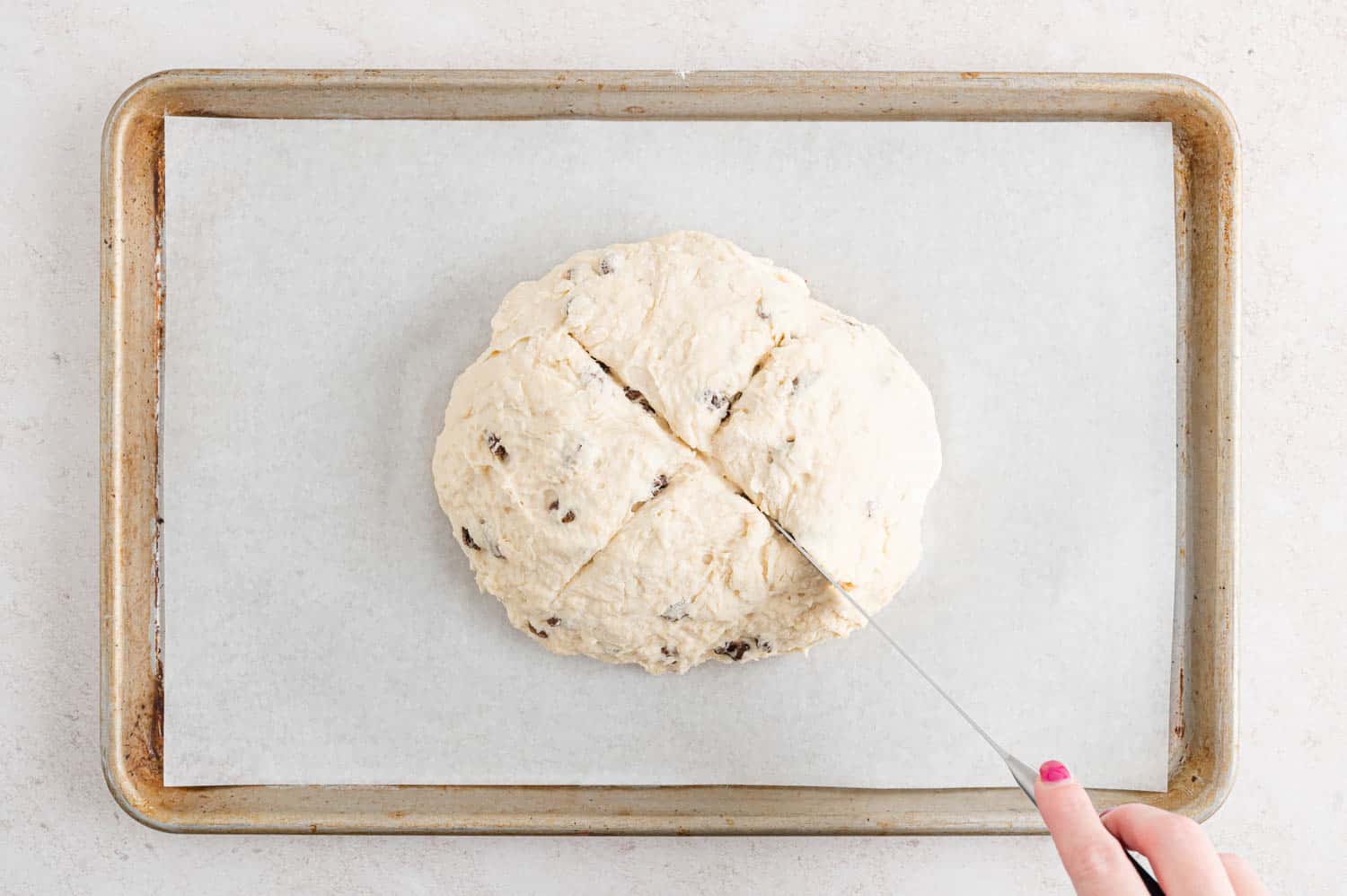
Why score the dough? Scoring the top of the dough isn’t merely for decorative purposes. Although folklore says the X is to let the devil (or fairies) out, there is actually a scientific reason. When the soda is mixed with buttermilk, carbon dioxide is released. The deep cuts allow the bread to expand as it bakes. If you don’t make the cuts, the top of the bread will split naturally but sometimes not as attractively.
Bake the bread for thirty minutes. Take a peek at it. Check to see if the top is getting too brown. If it is, cover the top loosely with a sheet of foil. Bake the bread for an additional ten minutes.
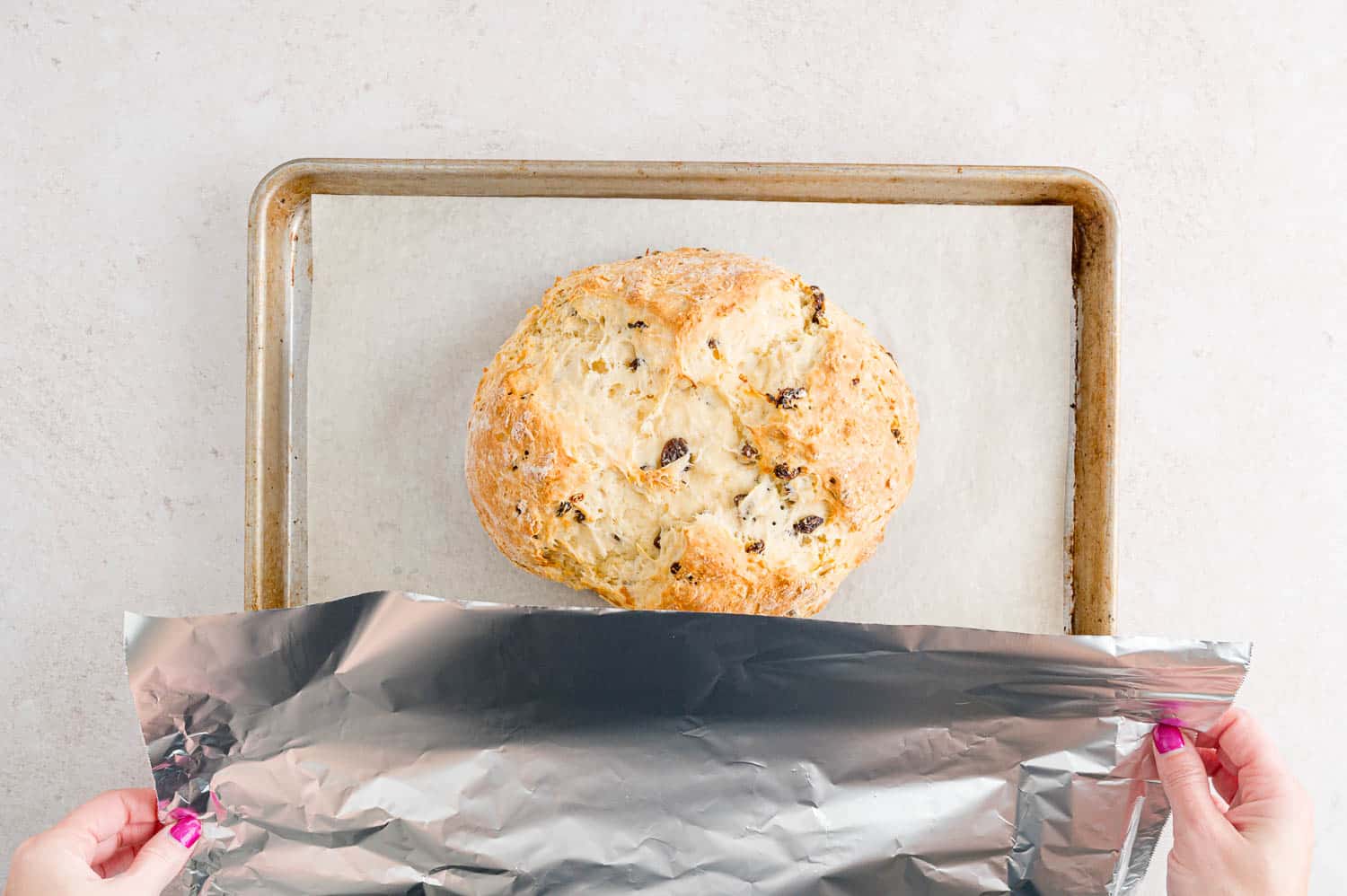
Check for doneness. You can check to see if the bread is done by using the toothpick test. Insert a toothpick into the center of the bread. If the toothpick comes out sticky and doughy, bake the bread longer. If it comes out clean or with a few crumbs attached, the bread is ready to take out of the oven.
Cool and slice. Cool the bread on a wire rack. It’s best eaten warm but let it cool for at least 10 to 15 minutes before slicing.
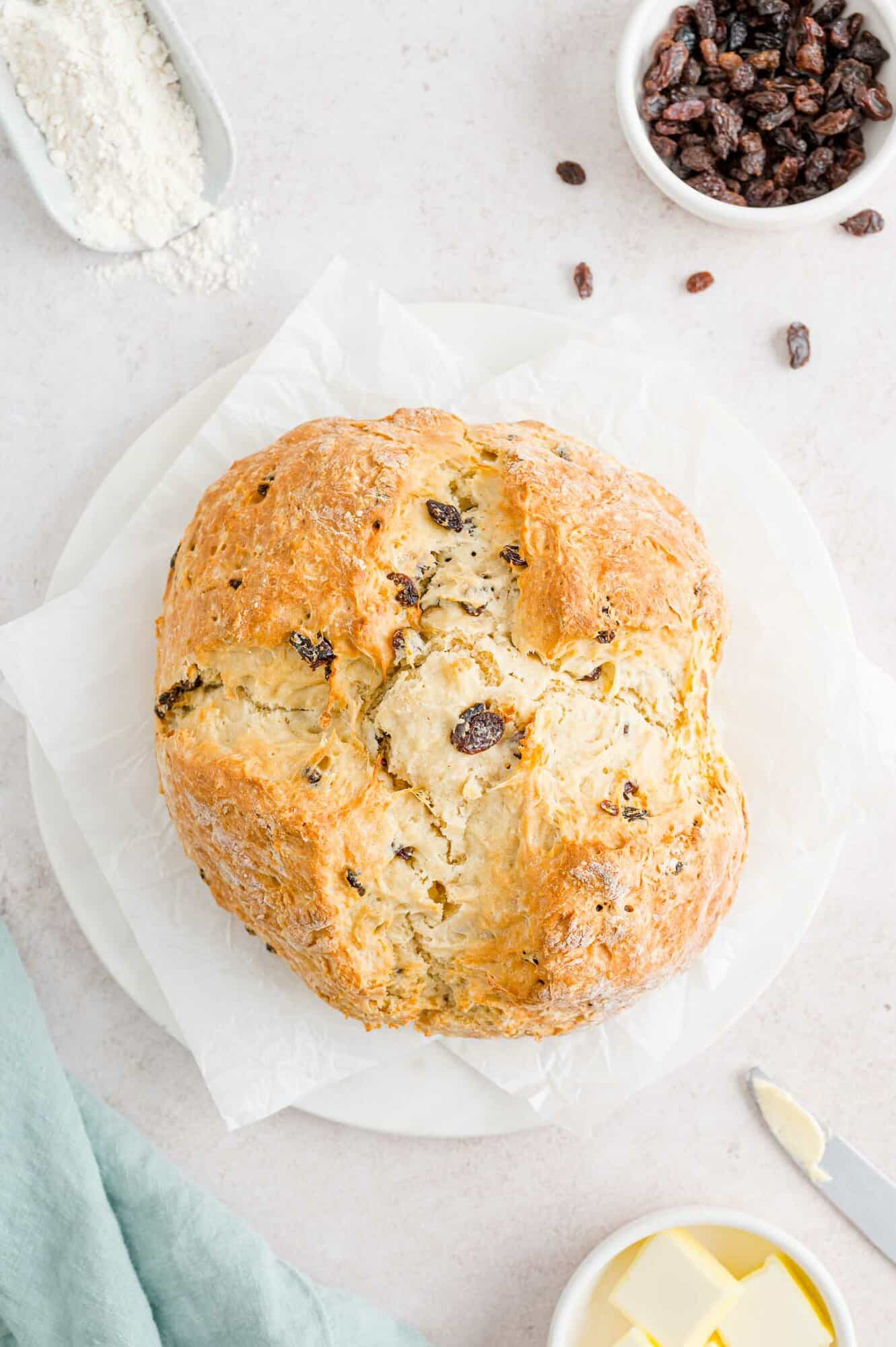
Serve. Serve the bread with plenty of softened butter. If you’re feeling fancy, make a compound butter (butter mixed with flavoring): orange honey butter or gingerbread butter.
Irish soda bread goes great with stews and soups. Try it with traditional shepherd’s pie or slow cooker corned beef and cabbage. It’s also a welcome addition to brunch menus and lunches. Leftover bread is wonderful toasted!
Recipe Variations
- Whole wheat Irish soda bread: Substitute whole wheat flour for half of the flour (2 cups). The bread will be a little denser with a more hearty flavor. If you use all whole wheat flour, the texture of the bread may be too dense and heavy.
- Raisin options: Substitute currants (Zante currants), dried cranberries, or dried cherries for the raisins, if you prefer. You could also omit the dried fruit.
- All out of buttermilk? It’s easy to make a substitute for buttermilk: simply put 2 tablespoons white vinegar into a measuring cup and fill the cup with milk, to make 1¾ cup. The vinegar has enough acid to activate the baking soda. This substitution works but the bread won’t be quite as flavorful.
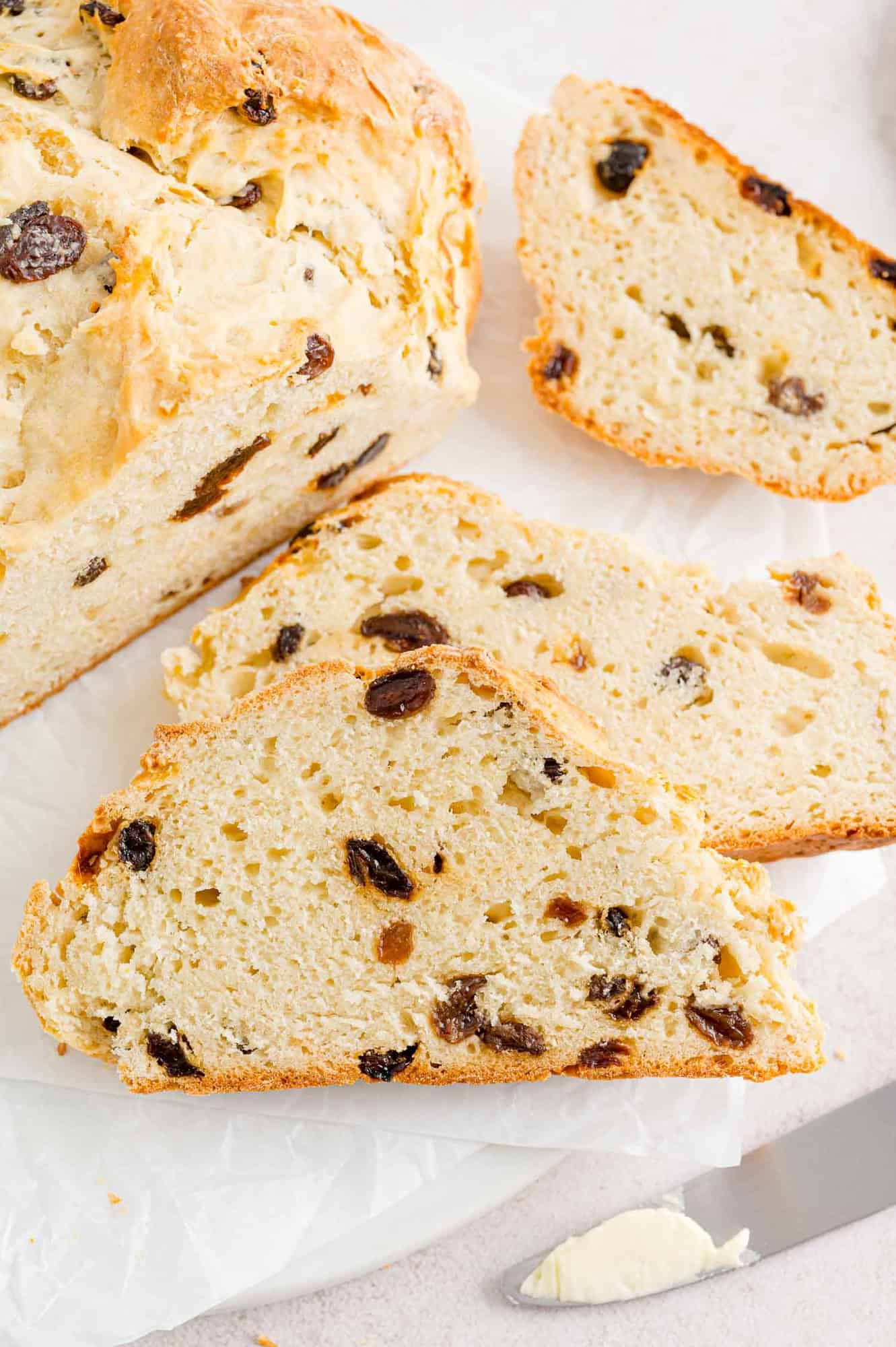
Cool the bread completely before storing it a plastic bag or airtight container. Leftover bread can be stored at room temperature for a few days. Keep in mind that the bread is made with zero preservatives so it won’t keep as long as bread you purchase.
For longer storage, refrigerate or freeze the bread. To freeze, wrap the slices securely with plastic wrap, then with a layer of foil or freezer paper. It will keep for a few months.
Leftover Irish soda bread is wonderful toasted. Make avocado toast for breakfast or lunch the next day. Toast the bread, add a layer of mashed ripe avocado, a slice of ripe tomato, and top with an over-easy fried egg.
Homemade Bread Recipes
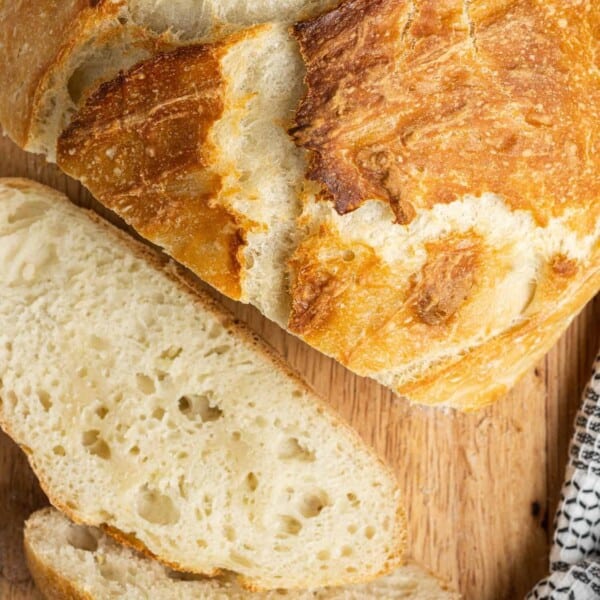
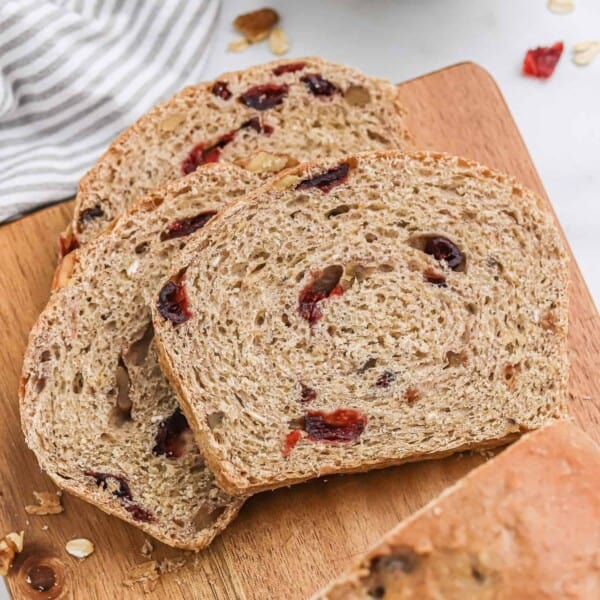
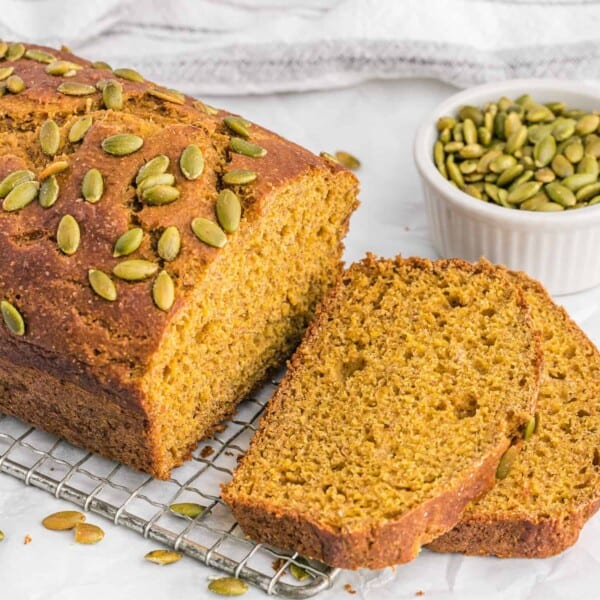

Irish Soda Bread
Ingredients
- 4 cups all-purpose flour (plus ¼ cup more for kneading)
- 2 tablespoons granulated sugar
- 1 teaspoon kosher salt
- 1 teaspoon baking soda
- 4 tablespoons butter, softened
- 1 cup raisins or currants (optional)
- 1 large egg, lightly beaten
- 1 ¾ cups buttermilk (see note)
Instructions
- Preheat oven to 400ºF. Line a baking sheet with parchment paper.
- In a large bowl, mix together flour, sugar, salt, and baking soda.4 cups all-purpose flour, 2 tablespoons granulated sugar, 1 teaspoon kosher salt, 1 teaspoon baking soda
- Using your hands, knead in the butter until it resembles coarse crumbs. (You can also use a pastry cutter or fork.) Mix in raisins, if using.4 tablespoons butter, softened, 1 cup raisins or currants
- Add egg and buttermilk; mix well with a sturdy wooden spoon or a dough whisk.1 large egg, lightly beaten, 1 ¾ cups buttermilk
- When it becomes too difficult to stir, turn dough out onto a floured surface. It should look like a shaggy, sticky dough. Sprinkle the top of the dough lightly with flour. Knead lightly, just enough to bring dough together so that you can shape it. The dough should still be fairly sticky..
- Form into a round loaf about 7 to 8 inches in diameter. Transfer to prepared pan. Using a sharp knife dipped in flour, score the top of the dough deeply with an X shape, roughly 5 inches, about ½ -inch deep.
- Bake for 30 minutes and check bread. If the bread seems to be getting too brown, tent loosely with foil. Bake for 10 minutes more or until crust is golden brown and a toothpick inserted in the center comes out clean or with a few crumbs.
- Let cool for 5 to 10 minutes on baking sheet before placing on a cooling rack. Slice into wedges or slices. Soda bread is best served warm.
Notes
- Make a buttermilk substitute: Put 2 tablespoons white vinegar in liquid measuring cup. Add milk to make 1¾ cup. Stir well; set aside for 5 minutes or until ready to use. We noticed that the dough was a little stickier when we used the buttermilk substitute, so you may need a bit more flour for kneading.
- Whole wheat soda bread: Substitute whole wheat flour for half of the all-purpose flour.
- Storage: Cool the bread completely before storing it a plastic bag or airtight container. I usually slice the entire loaf before storing it. Leftover bread can be stored at room temperature for a few days. It’s really good toasted! To freeze, wrap the slices securely with plastic wrap, then with a layer of foil or freezer paper. It will keep for a few months.
Video
Nutrition
Nutrition information is automatically calculated, so should only be used as an approximation.
 Did You Make This?Share a comment and rating below! I love hearing what you think!











Why won’t your videos work on my computer?
I’m not sure, that’s strange. Are you seeing an error message?