

Recipe Overview
Why you’ll love it: Learning how to cook kabocha squash doesn’t have to be difficult. With these 3 easy methods, you’ll find one that works for you!
How long it takes: depends which method you choose
Equipment you’ll need: depends on the method
Servings: depends on the size of the squash
I’ve had so much great feedback on my posts about how to cook spaghetti squash (5 ways!), how to cook acorn squash (2 ways), how to cook butternut squash (4 ways) and how to cook delicata squash. I knew it was time to cover kabocha squash!
What is Kabocha squash?
Kabocha is probably a lesser-known squash than butternut or acorn, but it’s really delicious, and if you haven’t tried this variety of winter squash, you should give kabocha a go! It’s wonderful on its own or made into a delicious creamy soup.
Also known as a Japanese pumpkin, kabocha is in the same family as Hubbard squash, turban squash, and buttercup squash.
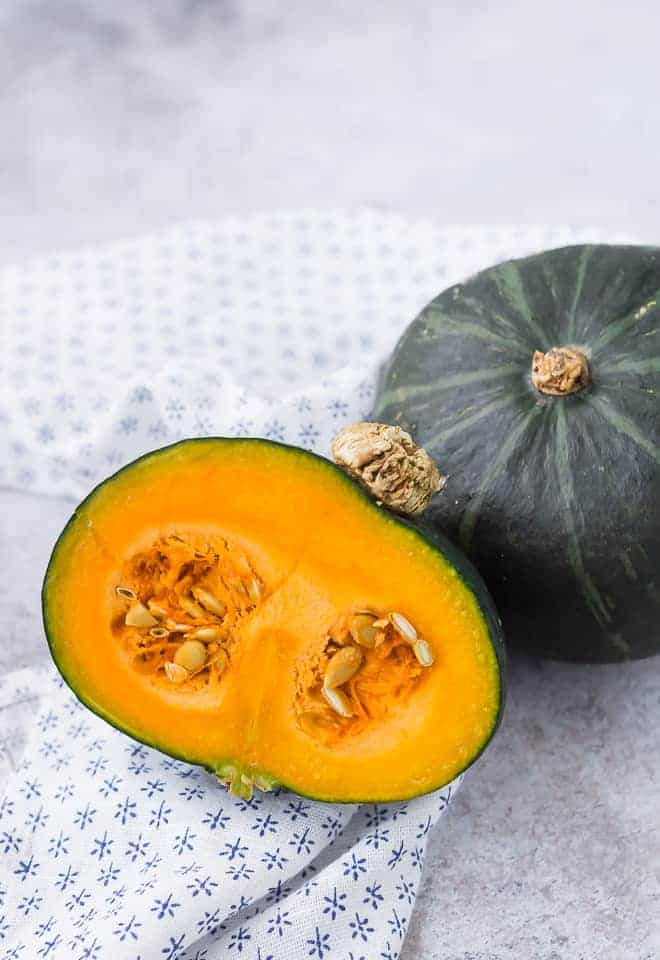
Kabocha is a hard squash, like most winter squash varieties are, and it has green, slightly bumpy skin, often with light green or white stripes, and dark yellow-orange flesh inside.
You’ll find that it’s a very sweet squash and has a slightly dry texture. Like other squash varieties, kabocha is a great source of vitamin A, vitamin C, and fiber. It can be used in many of the same ways that you’d use butternut squash.
You can actually eat the skin of kabocha squash but my preference is to peel it or scoop the flesh away from the peeling once it is cooked.
How to cook Kabocha squash 3 ways
Whether you need it quick or need it to cook all day while you’re gone, there is a method here for you. In this post, you’ll also find serving suggestions and general tips, but if you have any questions at all, leave me a comment. I always respond!
Each of these methods of cooking are different, but they’re all best for using the flesh as a mash or in soup. If you want cubed squash to roast, this variety of squash will also work for that but it’s a little tricky to peel. Follow this recipe for spicy sweet roasted butternut squash. It will work great with either kind of squash.
How to cook kabocha squash in the oven
This is likely the most well-known method.
- Prep the squash. Scrub the squash thoroughly. I like to clean all squash with a vegetable brush (this one is my absolute favorite). Carefully cut squash in half. BE CAREFUL. This is the most difficult part. If you want, you can cut a thin slice off the side so that you have a flat surface to prevent the squash from rolling around.
- Remove the seeds. I like to use a grapefruit spoon to scrape out the seeds and stringy membrane.
- Season. Drizzle each squash half with olive oil and use your hands to rub it all over the inside of the squash. Sprinkle with salt and pepper. Place on a baking sheet (I line mine with parchment for easy clean-up) cut side down.
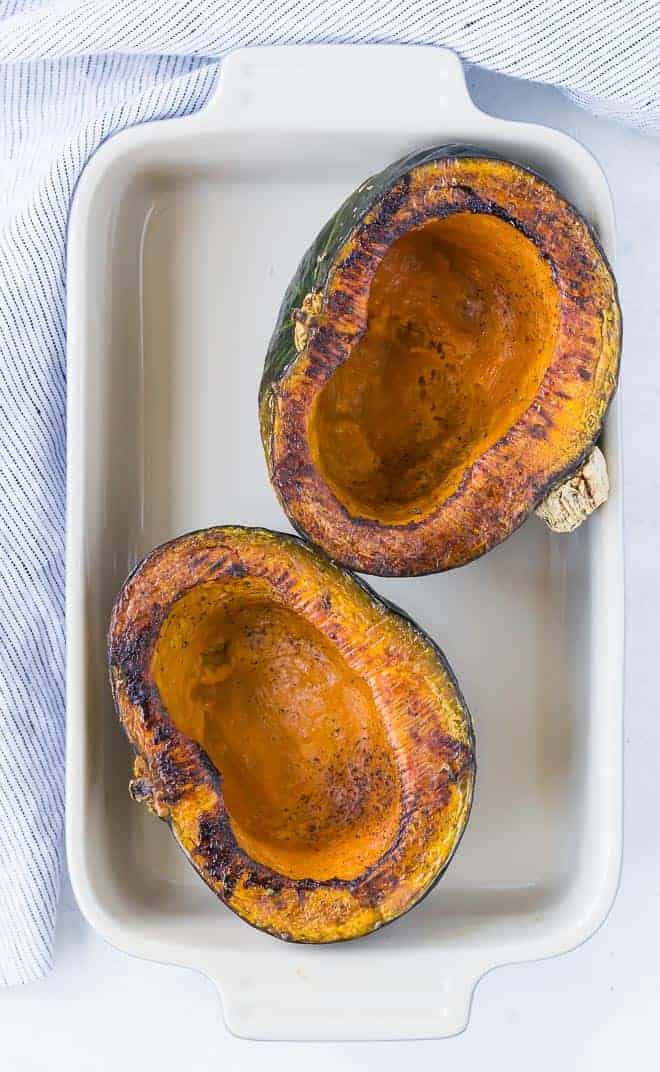
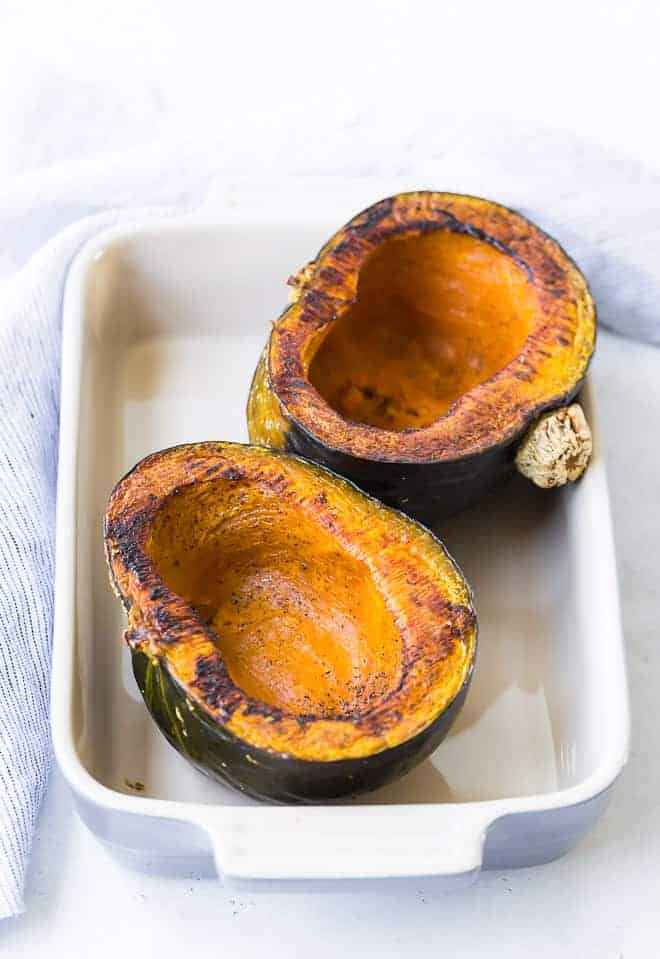
- Bake. Bake at 400°F for 45 to 60 minutes or until fork tender. Let it cool slightly so you can handle it. Then, use a spoon to scoop the flesh of the squash away from the skin.
How to cook kabocha squash in the slow cooker
This method is SO hands off and SO easy, it’s a dream come true! It does get very soft, so be prepared for a squash that might be falling apart a little when it is done. It’s a little harder to separate the cooked squash from the skin.
- Prep the squash. Scrub squash clean. You don’t have to cut it or remove the seeds. (Make sure the squash will fit into your slow cooker.)
- Cook. Place squash in slow cooker and place the cover on. Cook on high for 3 to 4 hours or on low for 6 to 8 hours, or until easily pierced with a knife.
- Finish. Carefully remove squash from the slow cooker, and let cool slightly. Cut in half and remove the seeds. Scoop flesh of squash out of shell.
How to cook kabocha Squash in the Instant Pot
- Check the fit. First off, make sure the squash fits in your Instant Pot! Most should fit in a 6 quart Instant Pot, but it’s a good idea to check first.
- Prep the squash. Scrub squash clean and carefully pierce all over with a sharp knife (10 to 15 cuts, ½-inch to 1-inch in size).
- Add water. Place steamer basket in the bottom of the pressure cooker and add 1 cup water. Place squash in/on steamer basket.
- Pressure cook. Secure lid, turn valve to seal, and set for 20 minutes on high pressure. When timer goes off, quick release pressure.
- Finish. Carefully remove squash from the pressure cooker. Let it cool enough to handle. Cut in half, remove seeds, and scoop out flesh.
Serving Suggestions
Kabocha squash is fantastic in squash soup or made into a simple mash (see recipe card notes for my suggestion on how to make a quick and easy mash!). It would also work well as a stuffed squash, like this stuffed acorn squash, if you use the oven method.
Kabocha can be used in nearly any way that butternut or acorn squash is used in. Check out this list of squash recipes for lots of ideas!
How to cut kabocha squash
- Scrub the squash first. Place it on a large cutting board that isn’t going to slip around on you. A steady surface is essential and please be careful!
- You’ll need a sturdy, sharp knife. It’s best if your knife is long enough to go all the way through the squash. Do NOT choose a flexible or serrated knife!
- Cut the stem end off. You don’t want to try to saw through that tough woody stem. (I left mine on because it looks pretty in the photos.) It also helps to cut a thin slice off the side of the squash, to stabilize it on your cutting board.
- Cut the squash vertically, from stem end to bottom end.
If you’re still having a hard time, try putting the whole squash into the oven for 10 minutes at 375º, or heat it in the microwave for 5 minutes or so. You’ll have to use mitts to handle it. Let it cool a bit before trying to cut into it. This softens the skin and makes it easier for the knife to slide through.
Cooked squash: Cover and refrigerate for up to four days. Freeze squash in a freezer-safe container or bag for up to 12 months. Uncooked, uncut squash will keep for 3-4 months in a cool, dry place. Discard if it becomes soft, squishy, or moldy.
Uncooked squash: Uncooked, uncut squash will keep for 3 to 4 months in a cool, dry place. Discard if it becomes soft, squishy, or moldy.
How to Cook Kabocha Squash

Ingredients
- 1 medium-sized kabocha squash (between 2 ½ and 3 pounds)
- 1 teaspoon olive oil (for oven method)
- ¼ teaspoon kosher salt, or to taste (for oven method)
- ⅛ teaspoon ground black pepper, or to taste (for oven method)
Instructions
Oven Method:
- Preheat oven to 400ºF. Place parchment paper or foil in baking pan that is large enough to hold both halves of the squash.
- Scrub squash well with vegetable brush, cut in half, remove seeds. Brush with oil, and season with salt and pepper. Place on prepared baking pan.
- Bake 45 to 60 minutes, or until fork tender (easily pierced with fork).
- Cool slightly and carefully scrape cooked squash from skin with a large spoon. Place cooked squash into large bowl.
Slow Cooker Method:
- Scrub squash well with vegetable brush. Place whole squash into slow cooker.
- Cook on low for 5 to 6 hours, or until easily pierced with fork.
- Remove from slow cooker, cool slightly, cut in half, discard seeds, and carefully scrape cooked squash from skin. Place cooked squash into bowl.
Instant Pot/Pressure Cooker Method:
- Scrub squash well with vegetable brush. Pierce the skin of the squash in several places with a sharp knife, making 10 to 15 small cuts, about ½ to 1-inch each.
- Pour 1 cup of water into bottom of Instant Pot. Place squash on steamer basket inside Instant Pot.
- Cover, and bring to pressure. Cook on high pressure for 20 minutes. Use quick release to release pressure.
- Cool slightly and remove squash from Instant Pot. Cut in half, discard seeds, and carefully scrape cooked squash from skin. Place cooked squash into bowl.
Notes
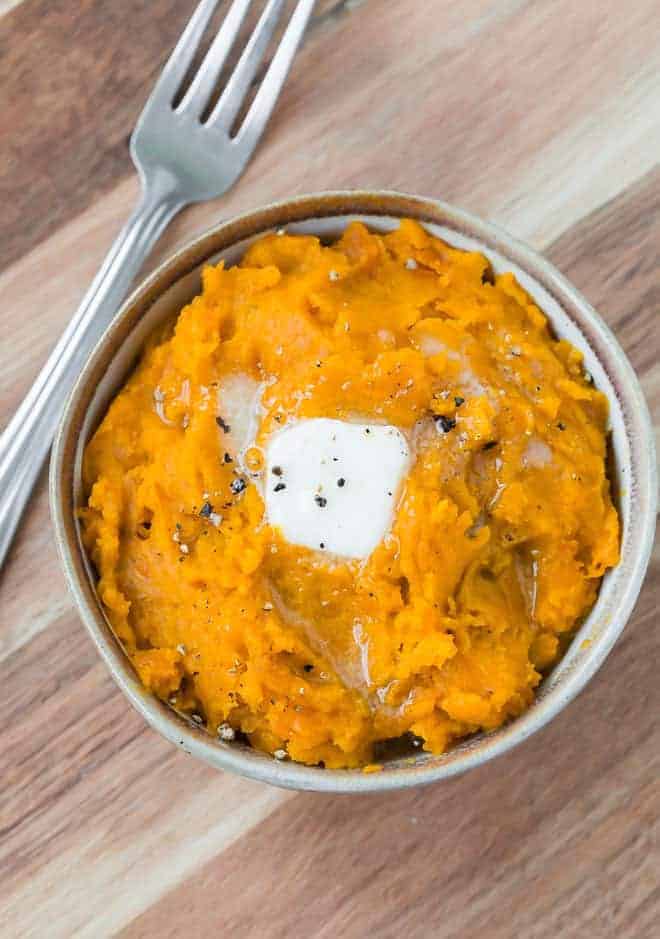
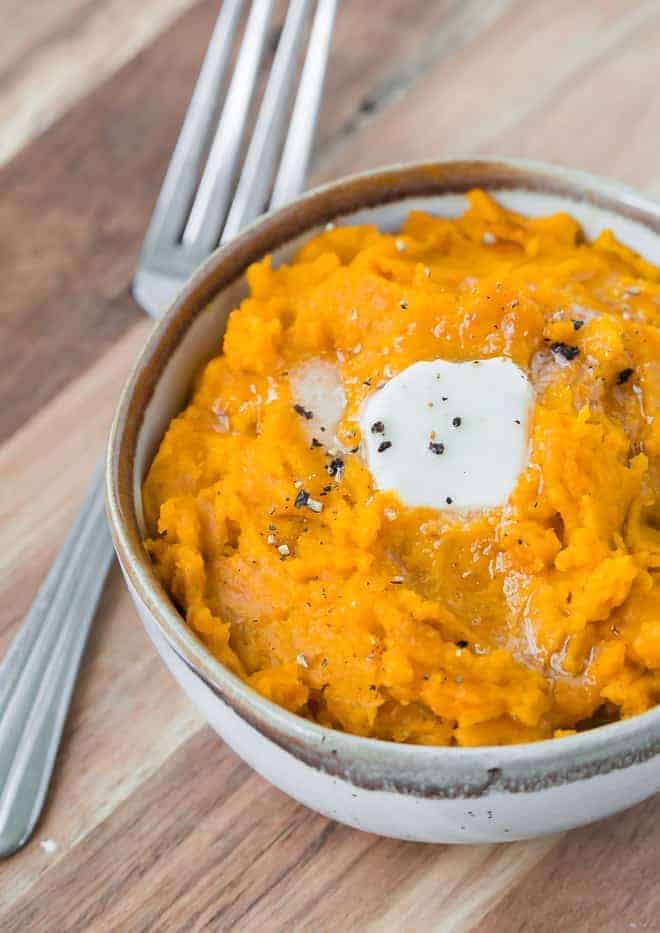
- To make squash mash: For a simple squash mash, mash squash flesh with fork, potato masher, or electric mixer. Mix in ¼ to ½ cup milk (add more or less milk to achieve desired consistency), 2 tablespoons unsalted butter, and salt and pepper to taste. Stir in your choice of spices such as cinnamon, ginger, cayenne, paprika, or smoked paprika. Squash is great topped with a little bacon, feta, and chives.
- Storage: Cooked squash should be transferred to a covered container and refrigerated for up to 4 days, or frozen for up to a year. Uncooked uncut squash can be stored in a cool dry place for 2 to 3 months.
Nutrition
Nutrition information is automatically calculated, so should only be used as an approximation.
 Did You Make This?Share a comment and rating below! I love hearing what you think!










Thank you for these instructions. I had never even heard of KABOCHA squash. I followed your oven method and the results was great. In a bowl with a little butter and pepper. Delish!
So glad you liked it, thanks Kim! Thank you for taking the time to come back and leave a comment!
This was so yummy! I’ve never cooked this before and your post was so helpful! Cooked it in the IP and then mashed it. I made it Whole30 and used ghee and coconut milk. Have you ever tried to grow it? I’m wondering if I can use the seeds after it was cooked…?
So glad you liked it! I bet it was awesome with ghee and coconut milk! I have never tried to grow it…I can cook, but I don’t have much of a green thumb.
You can totally plant the seeds before cooking. I tried it a few years ago with good results.
Great tip, thanks!
Can kabocha squash be totally dark green when you prepare it or does it have to have so orange or yellowing on the peel outside? In other words: do you have to have it standing around in the house for it to ripen a bit? Is it any better if it gets more orange on the skin? This is the only thing that confuses me about this squash.
Hi Nettie!
Choosing a ripe squash can be a little tricky, can’t it? You really never know until you cut into it. The inside should be dark orange and have kind of a dry appearance.
I look for a squash that’s dark green in color. Ideally, it should have splashes of gray or orange on the outside. The squash should feel heavy for its size. I don’t think they ripen much after they’re picked unless you happen to have a really sunny spot in your home or outside. Here in Michigan that’s pretty much an impossibility in January.
For anyone who wonders what Kabocha tastes like, I would say it is similar to chestnuts.
It does have a slightly nutty flavor!
Do you need to pierce the squash if you are using the slow cooker?
Nope! It’s so easy!
When putting halved squash into the oven, does it go cut side up or cut side down when placed onto a cookie sheet?. Thank you
You can actually do it either way! If you like those browned edges, do it face down. If not, do it face up!
I sliced mine in half, removed the seeds, added a light salting of the flesh then lightly scored the flesh, added s ok me chunks of butter and some brown sugar. I microwaved half for about 8 minutes. It was fabulous!!!!
Sounds delicious! You can’t go wrong with butter and brown sugar!
Try using coconut sugar instead for a healthier version. If you’re not familiar (if you’re using brown sugar I’m guessing you’re not), it does not taste like coconut, but rather caramel-y—very close to brown sugar.
Yes! Coconut sugar is very good and would be great on squash.
Is there no liquid for the crockpot method?
Correct!
This sounds interesting..!! I’ll definitely try this soon. Thanks for sharing..!!
I hope you love it! It’s a really flavorful squash variety.
my comment disappeared.
you’re making me hungry for squash
I have all my comments go to moderation so I can make sure I reply to all of them. :) I’m so glad it’s squash season!