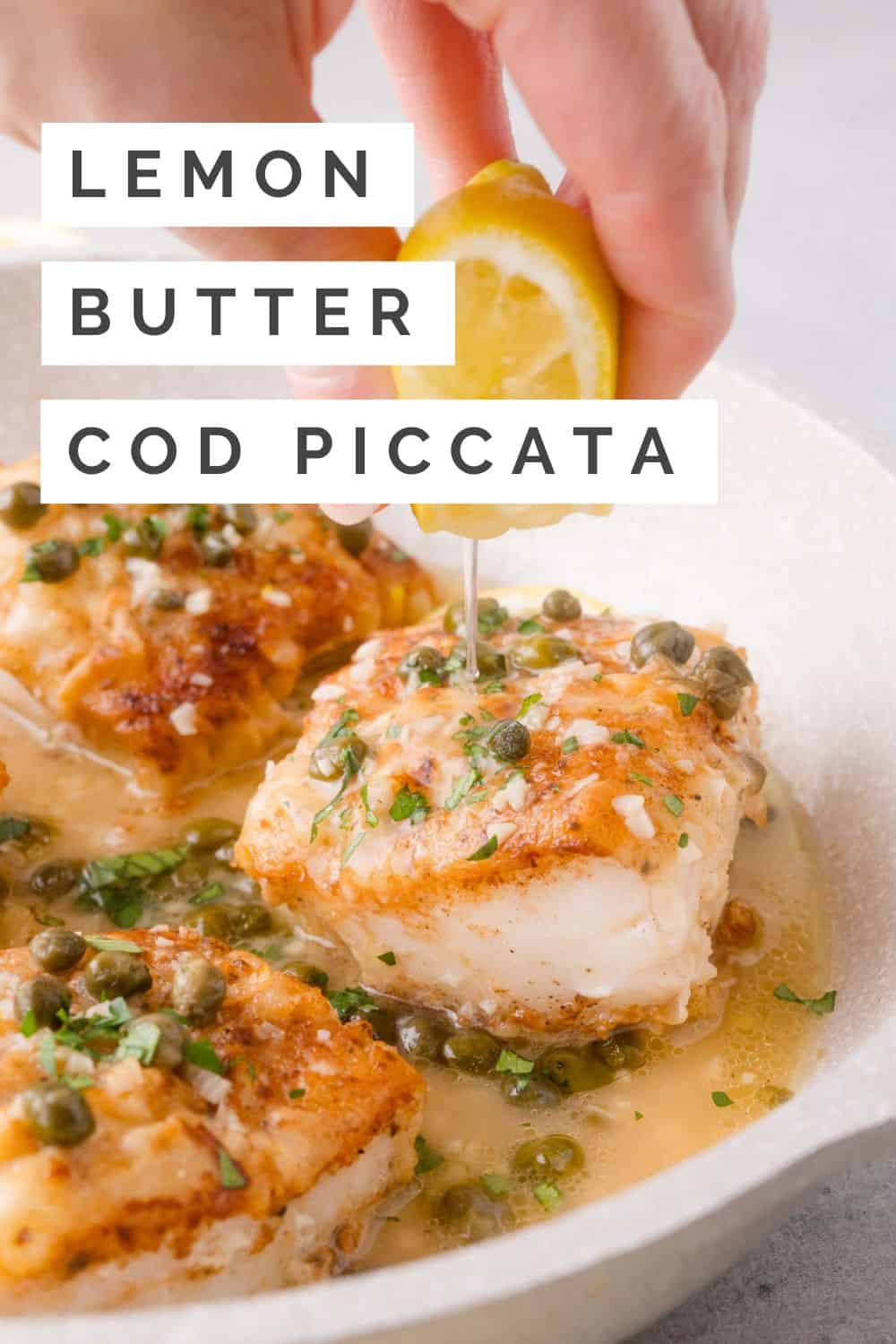
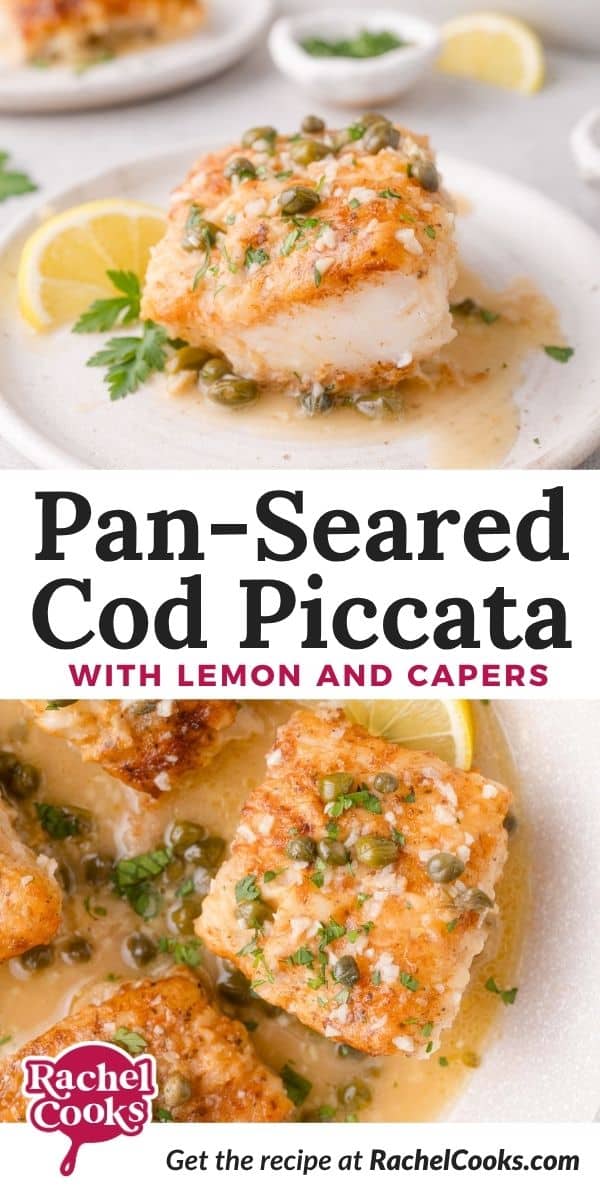
Recipe Overview
Why you’ll love it: Cod piccata is light, bright, and briny thanks to a combination of fresh lemon and capers. Tender, flaky cod is pan-seared until golden, then finished in a buttery sauce that tastes like it came straight from a restaurant kitchen.
How long it takes: 30 minutes
Equipment you’ll need: large nonstick skillet, tongs or fish spatula
Servings: 4
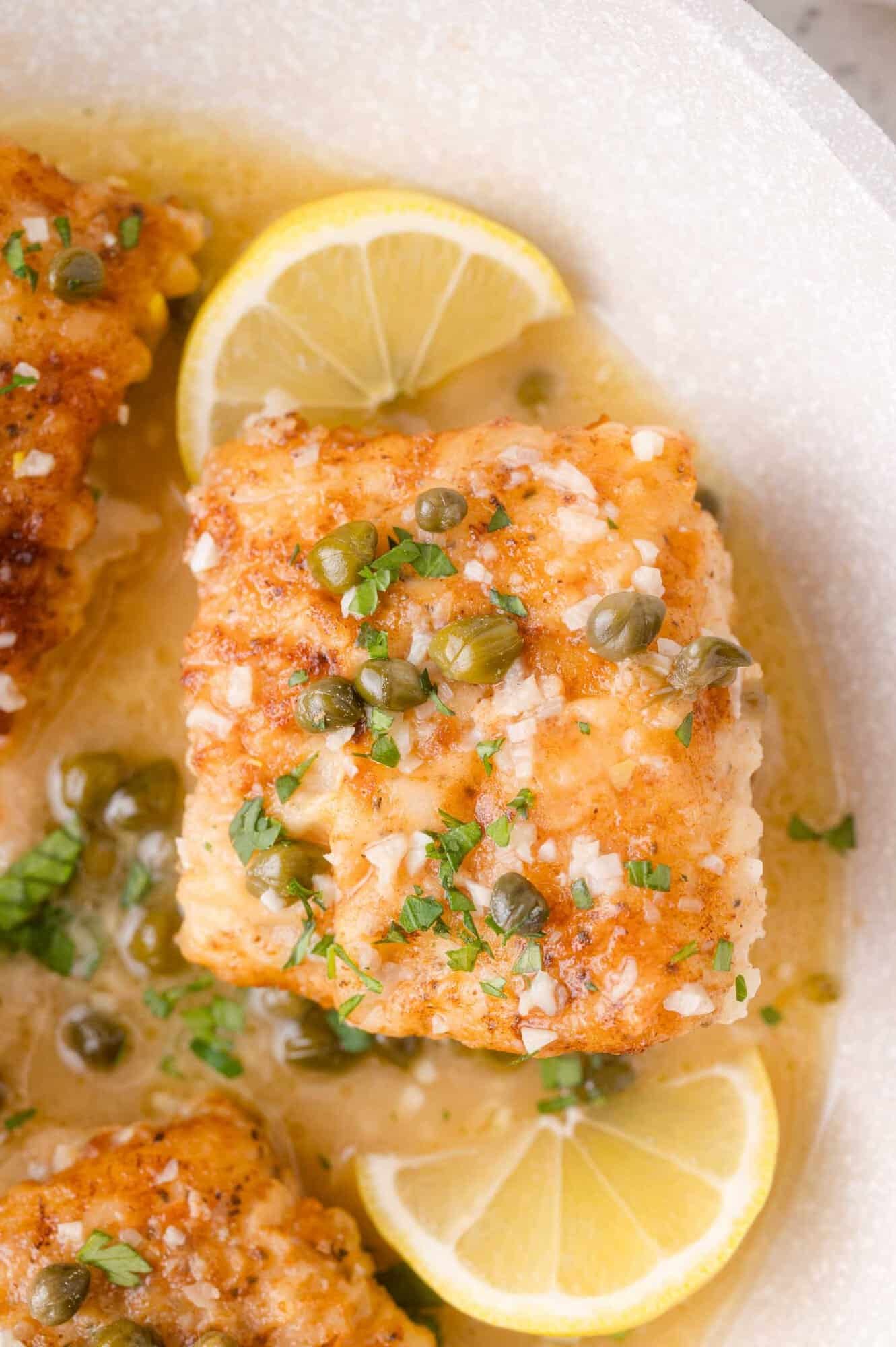
A Simple, Bright Dinner
There are nights when I want something that doesn’t feel heavy, but I still want it to taste like an actual dinner.
This cod piccata is quick, it’s simple, and it has enough going on that you’re not sitting there thinking you should’ve just ordered takeout. The lemon and capers keep it bright, and the butter smooths everything out. And cod (also a win in this Parmesan baked cod recipe!) has the perfect mild flavor to let those big flavors shine.
What makes it special:
- Quick enough for a weeknight: If you’re in a pasta-and-baked-chicken rut with your weeknight meals, it’s time to add cod piccata to your rotation. This is a dinner worth looking forward to, but it’s ready to eat in just 30 minutes!
- Simple ingredients, big payoff: Pantry and refrigerator staples transform cod into a show-stopping dinner. If you get a mild sense of panic anytime you see a long ingredient list, this is the kind of recipe you’ll appreciate!
Ingredient Notes
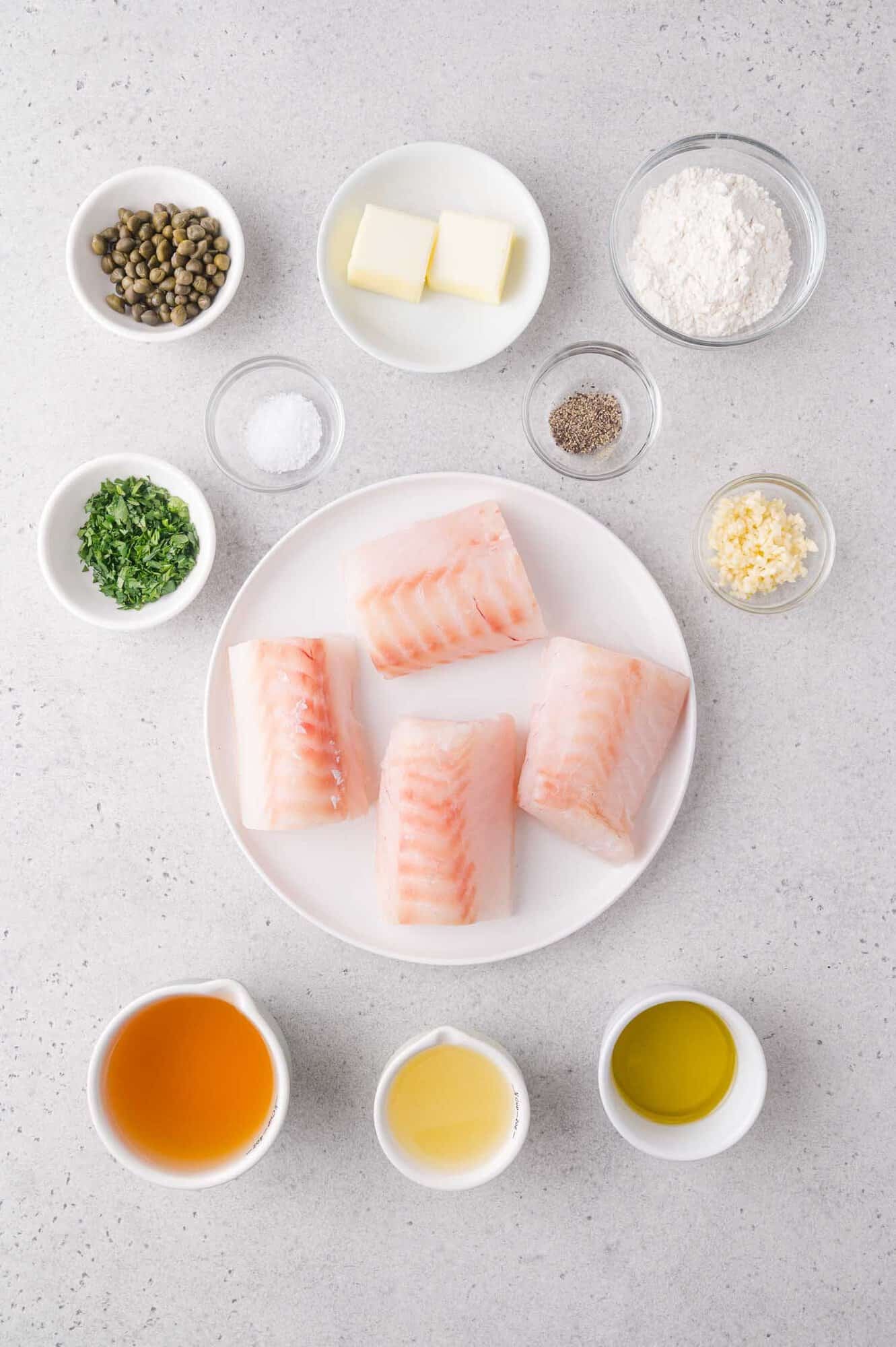
You’ll find the full ingredient list in the recipe card but here’s what you’ll need and why.
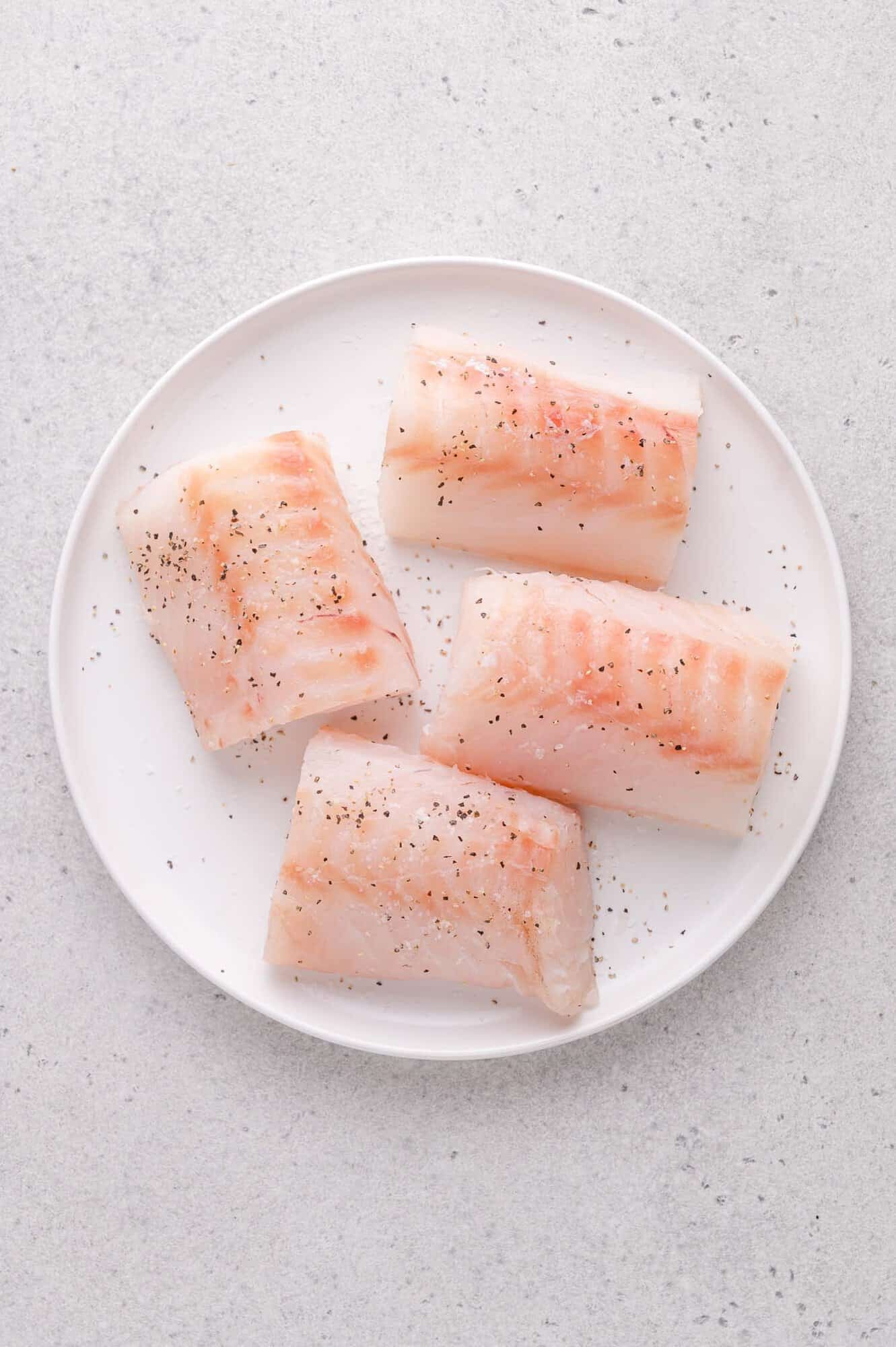
- Cod fillets: Look for fillets that are about 6 ounces each. If you’re using frozen cod, be sure it’s fully thawed. I season the cod lightly with salt and pepper, then dredge the fillets lightly in flour for a delicate crust.
- Olive oil and unsalted butter: The cod is sautéed in a combination of oils which gives you the best of both worlds—good browning from the oil and rich flavor from the butter.
- Sauce: Chicken broth (I use low sodium), butter, and fresh lemon juice form the base of the sauce. Freshly minced garlic adds savory depth, along with briny capers.
- Fresh parsley, sliced lemon: A handful of fresh chopped parsley adds a pop of color and freshness at the end. I usually garnish cod piccata with fresh lemon slices, too.
How to Make Cod Piccata
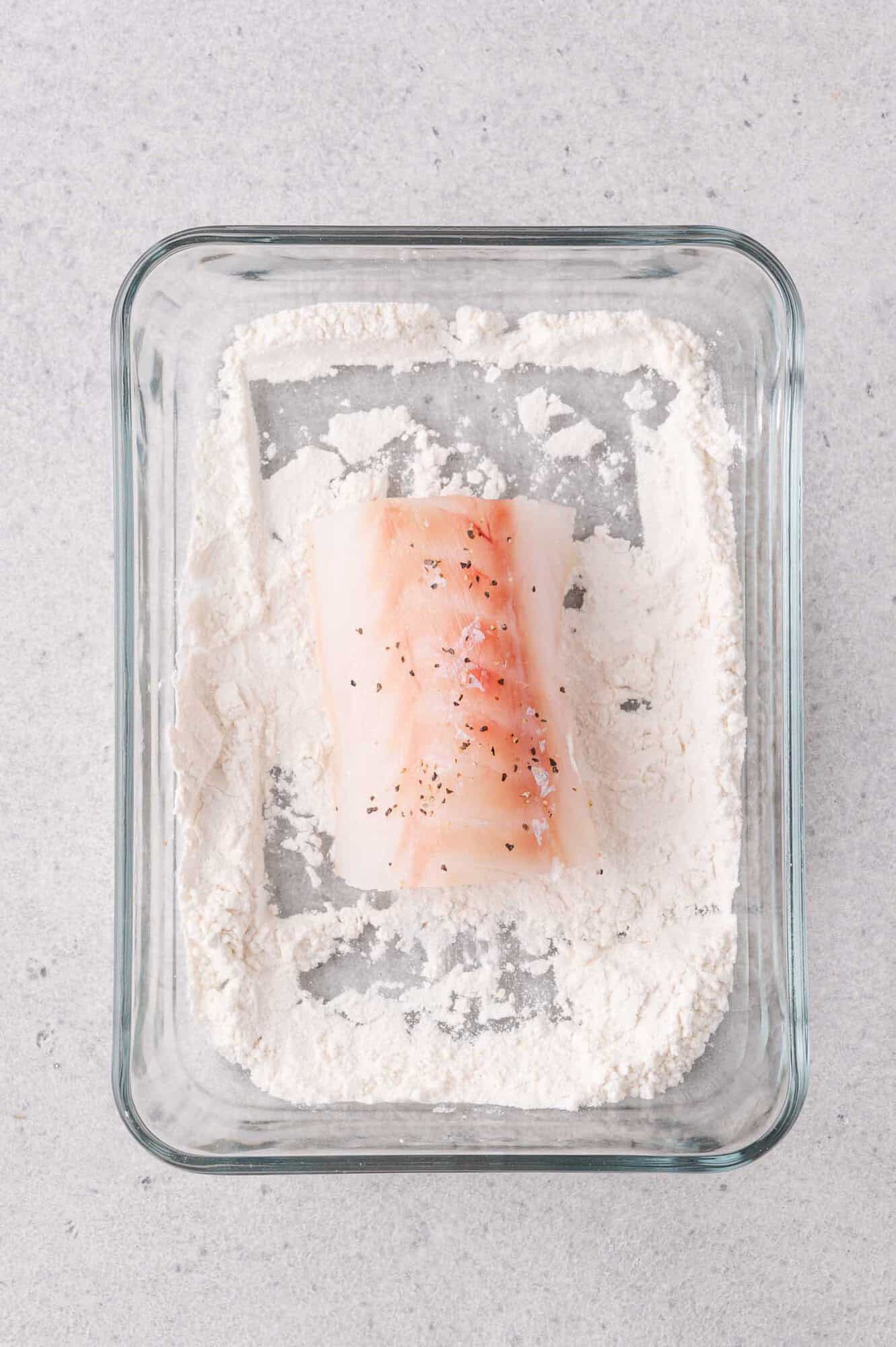
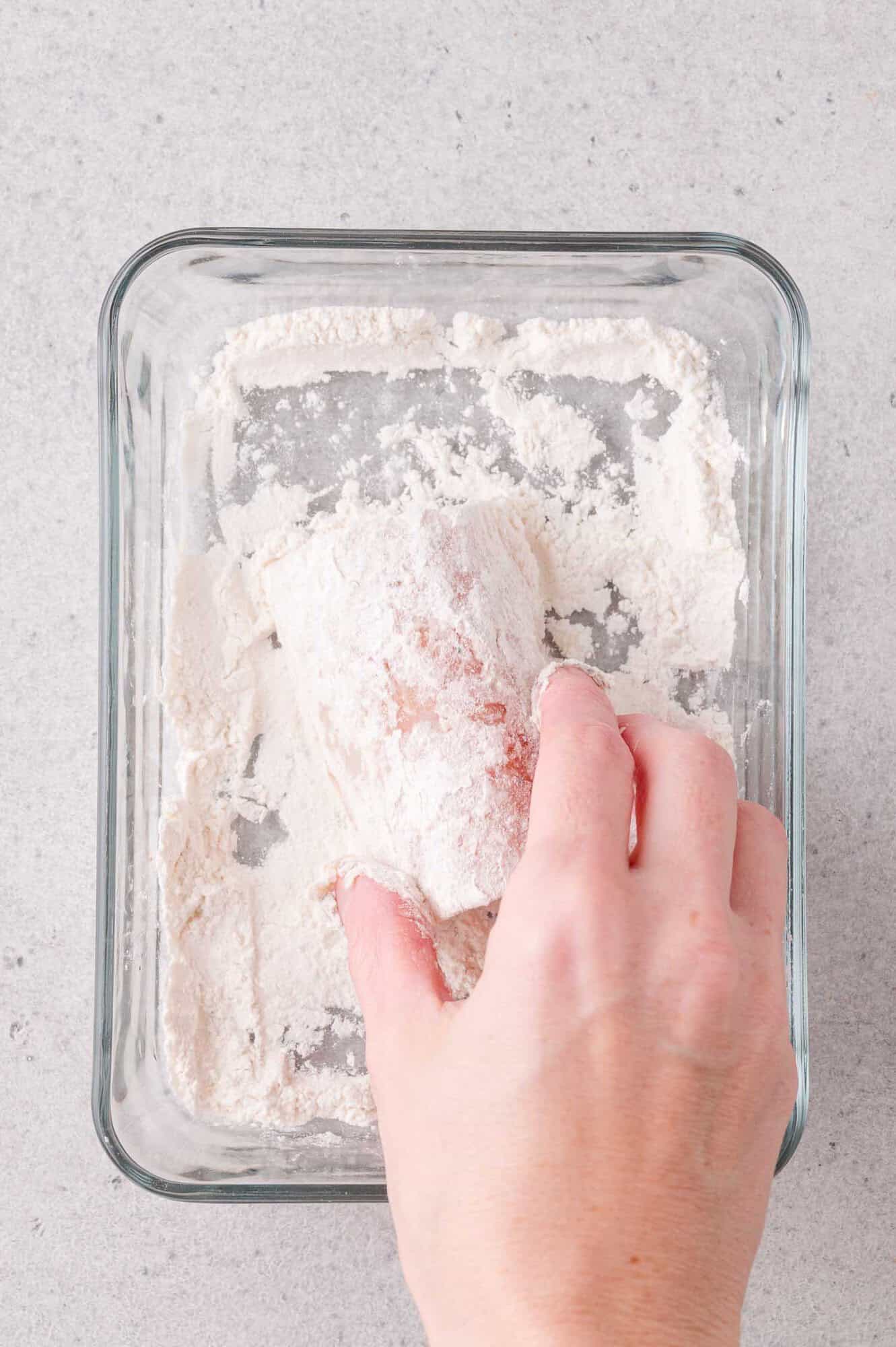
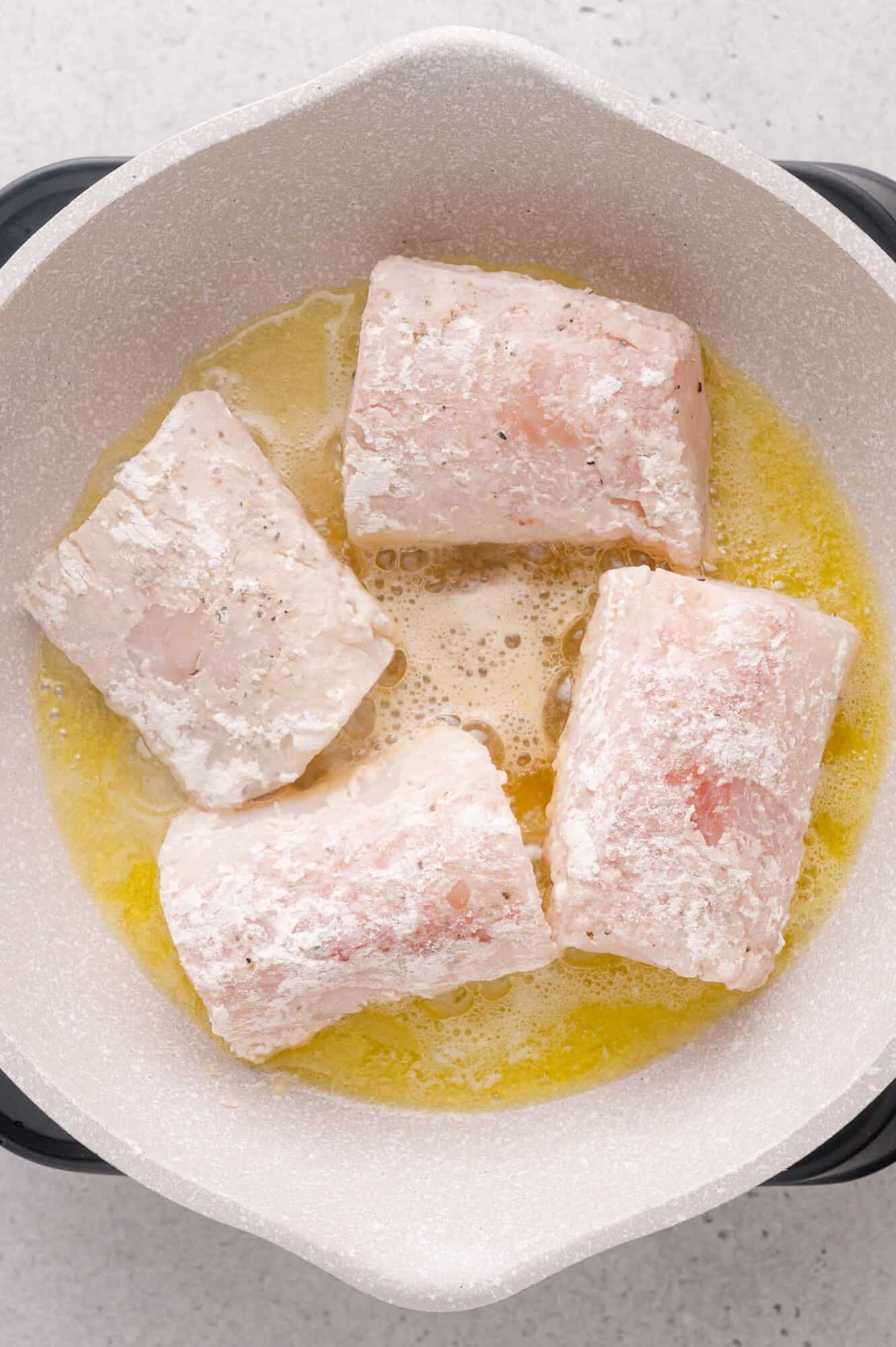
Season and dredge. Pat the cod dry with paper towels. Season both sides with salt and pepper. Lightly dredge each fillet in flour, shaking off any excess. You want a thin even coating.
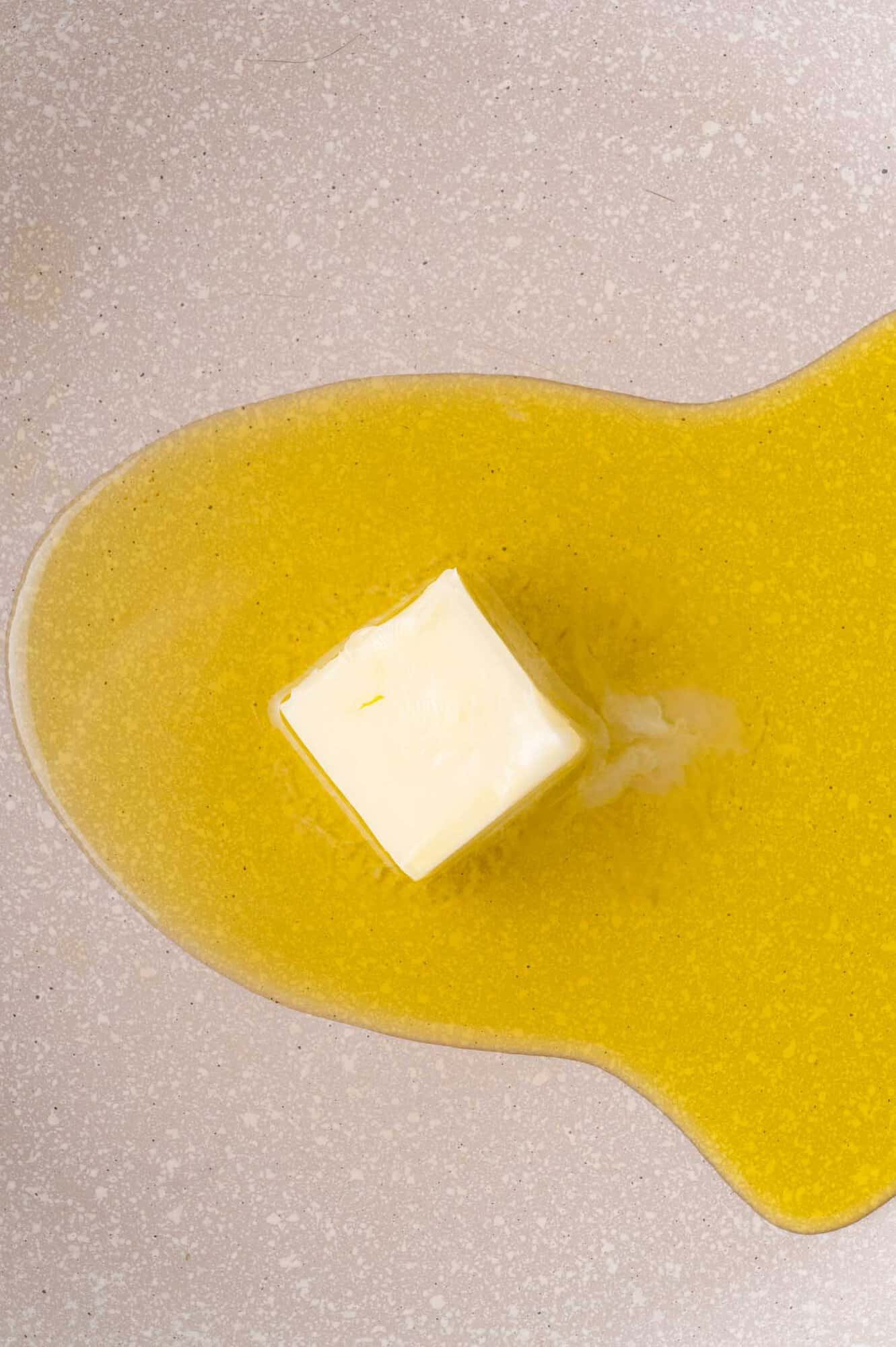
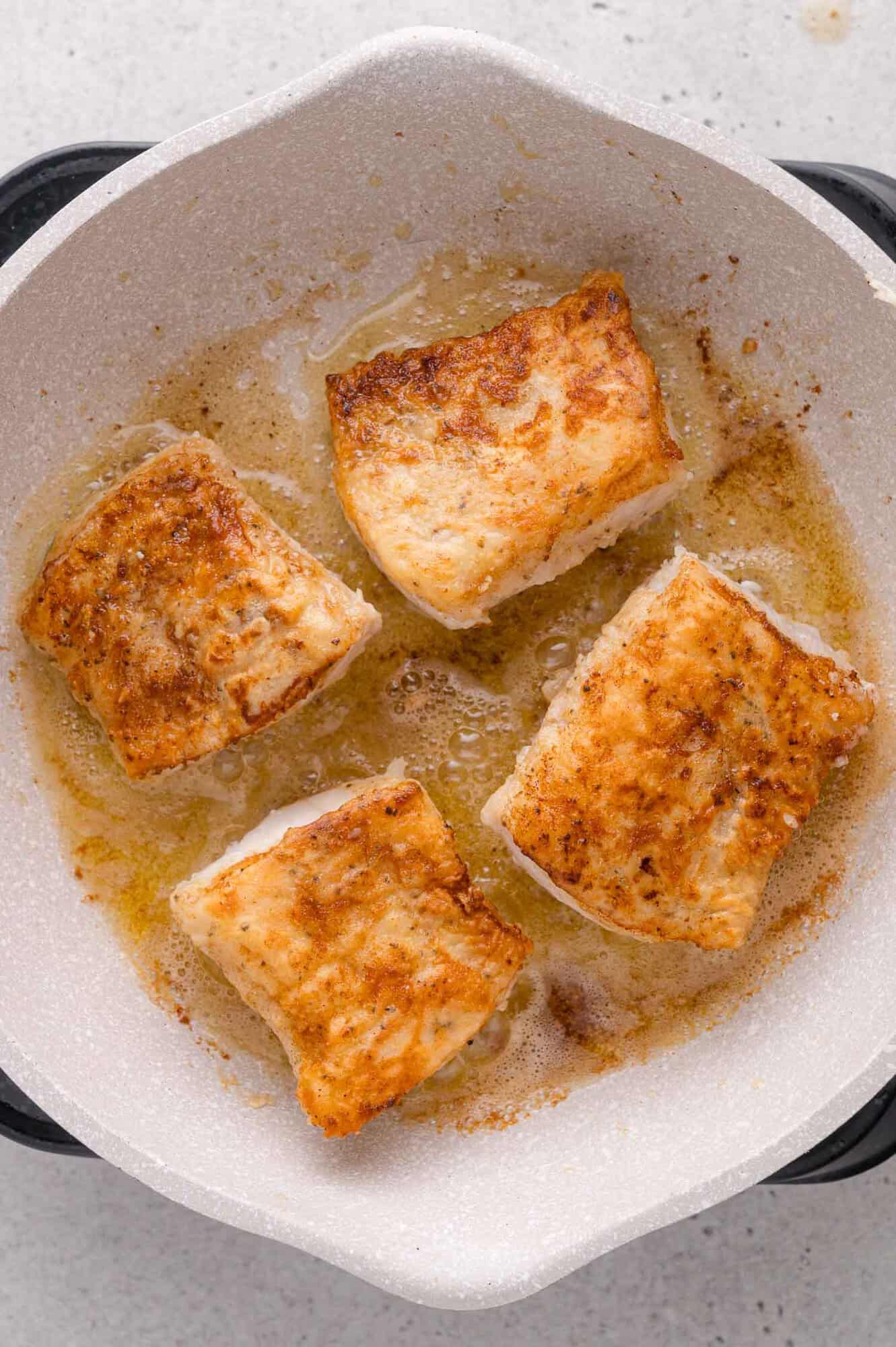
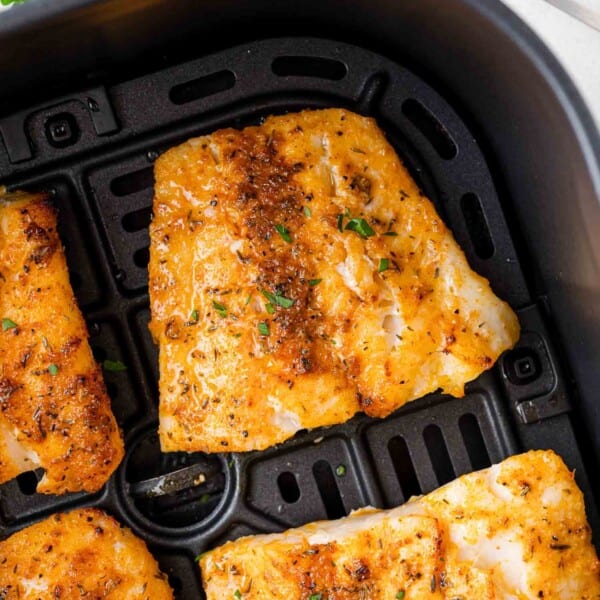
Sear the cod. Heat the olive oil and 1 tablespoon of butter in a nonstick skillet over medium-high heat. Once it’s hot, add the cod (you should hear a good sizzle!) and cook for 4 to 5 minutes on each side. The fish should be golden brown and flake easily with a fork. Transfer to a plate and cover loosely.
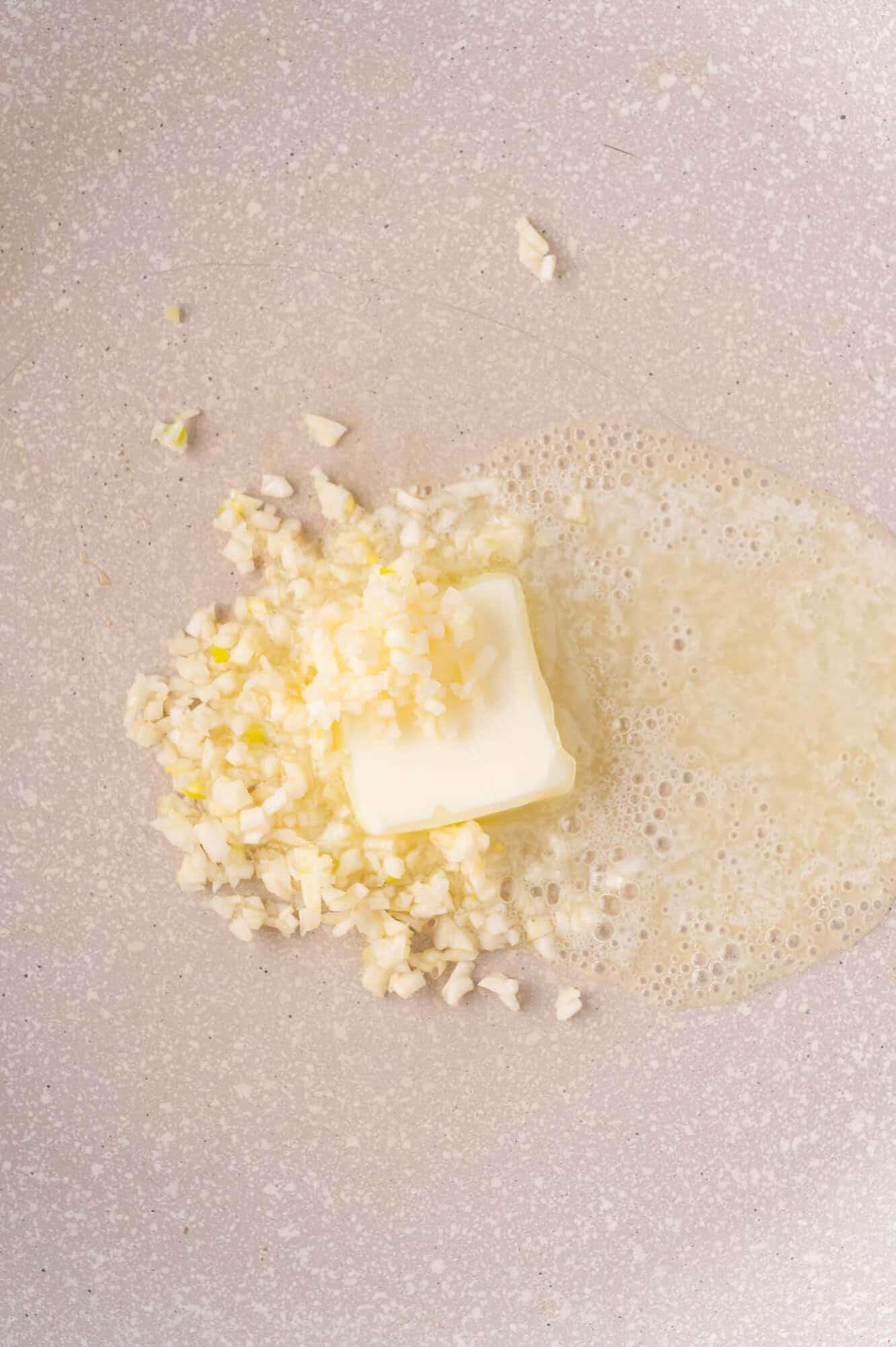
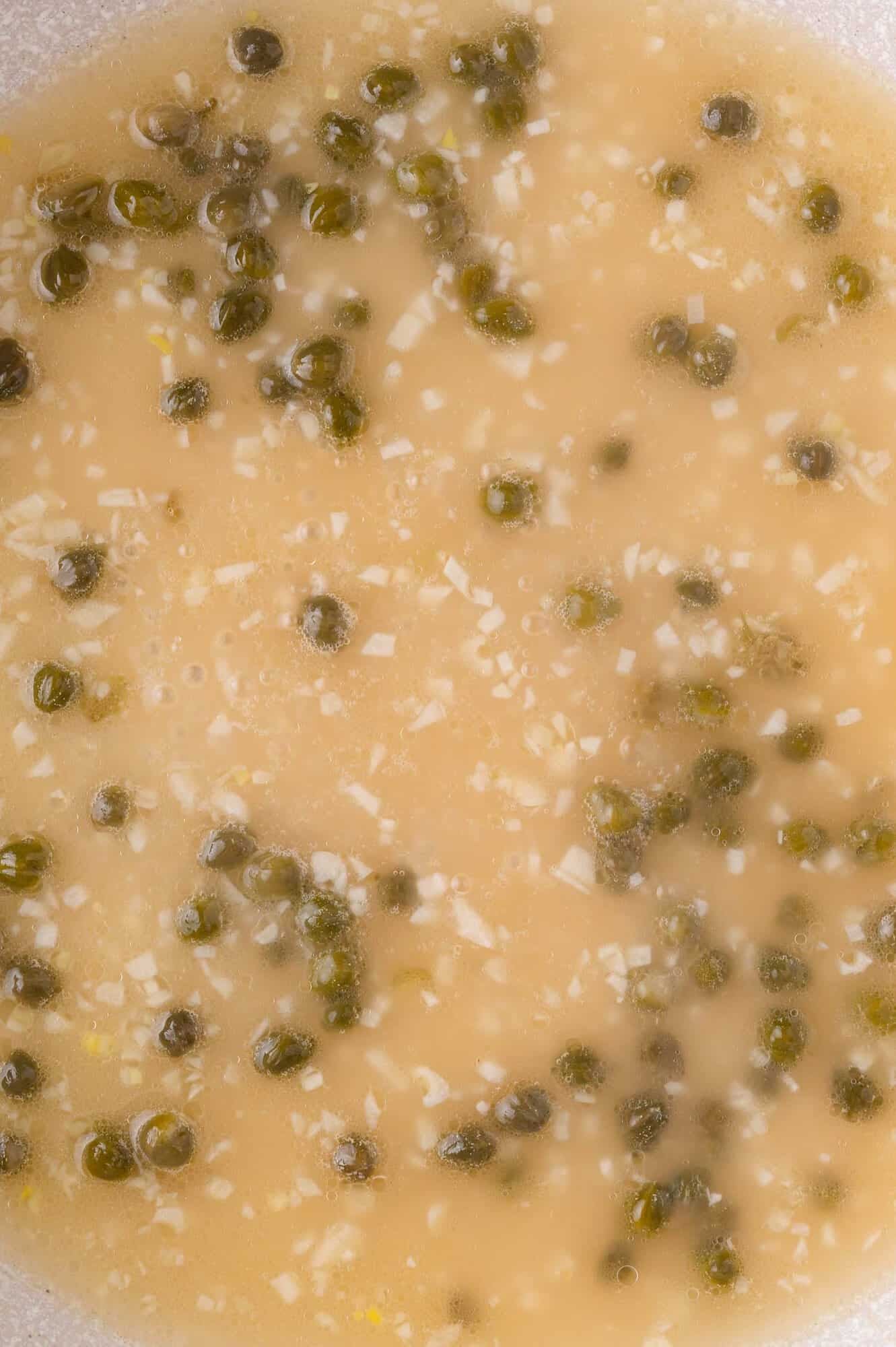
Start the lemon-caper sauce. Reduce the heat to medium. Add the remaining butter and the garlic to the skillet. Cook for about 30 seconds, stirring constantly, just until fragrant. (Don’t let the garlic brown!)
A Quick Note About Blue Garlic
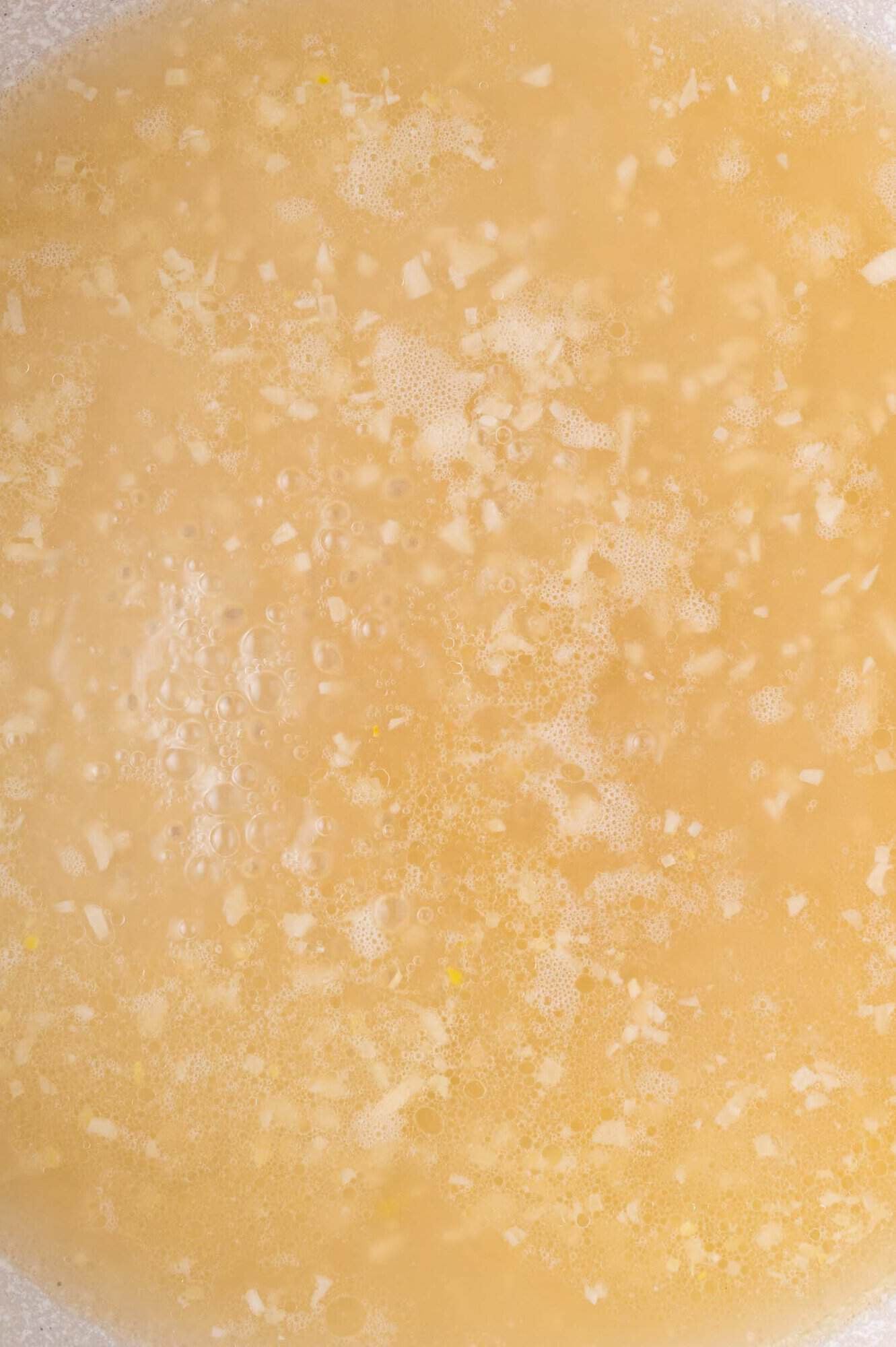
Sometimes when I make this recipe, the minced garlic takes on a blue-ish shade once it hits the lemon juice. If this happens to you, don’t panic! When garlic is combined with acidic ingredients like lemon juice, a natural chemical reaction can occur that causes the garlic to turn blue or green. It may look surprising, but it’s completely safe to eat and doesn’t affect the flavor at all.
Simmer. Pour in the chicken broth and lemon juice and let the sauce simmer for 2 to 3 minutes, until slightly reduced. Keep in mind this is a light, thin sauce—there won’t be a huge amount of it, but it’s very flavorful.
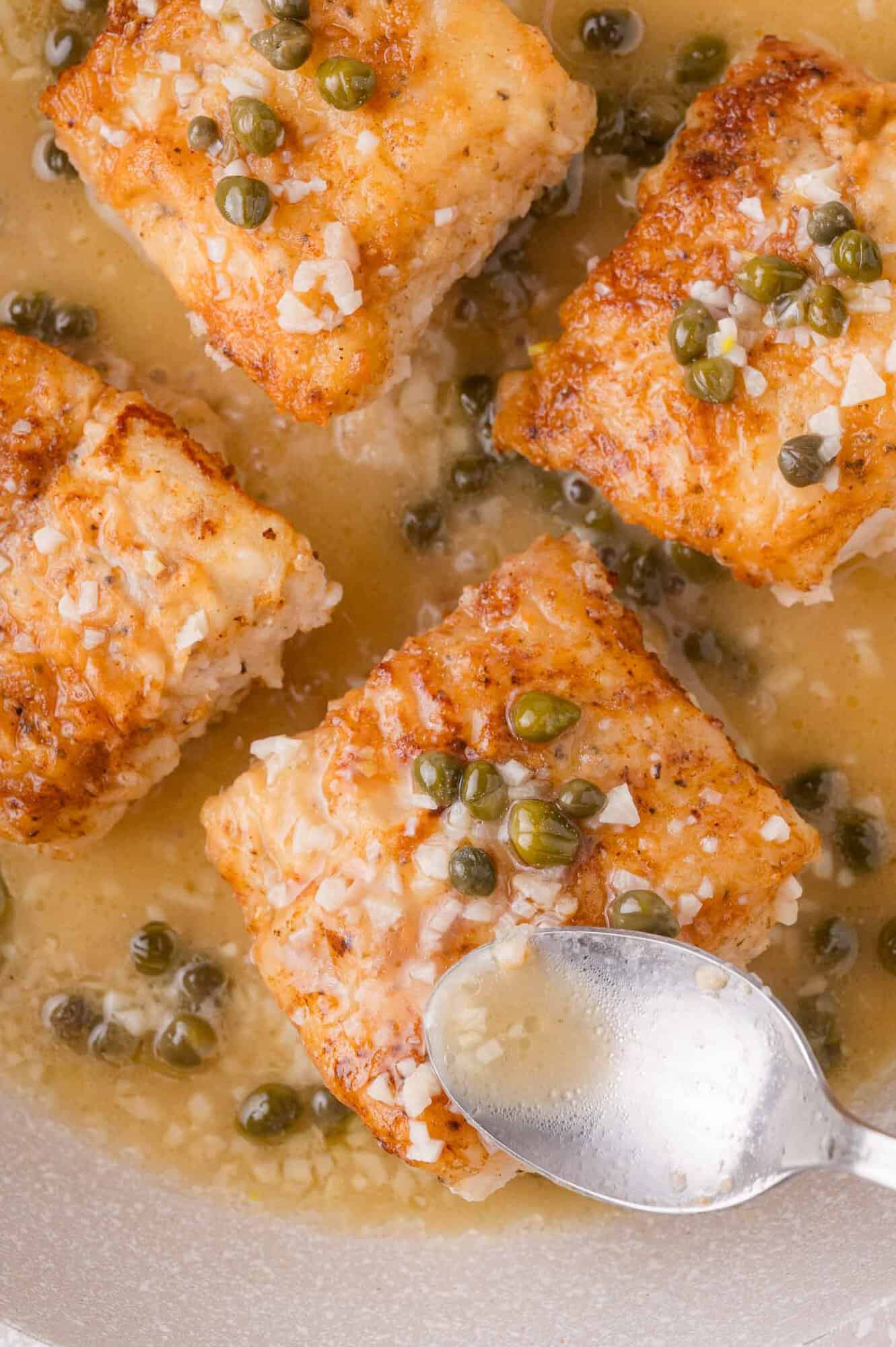
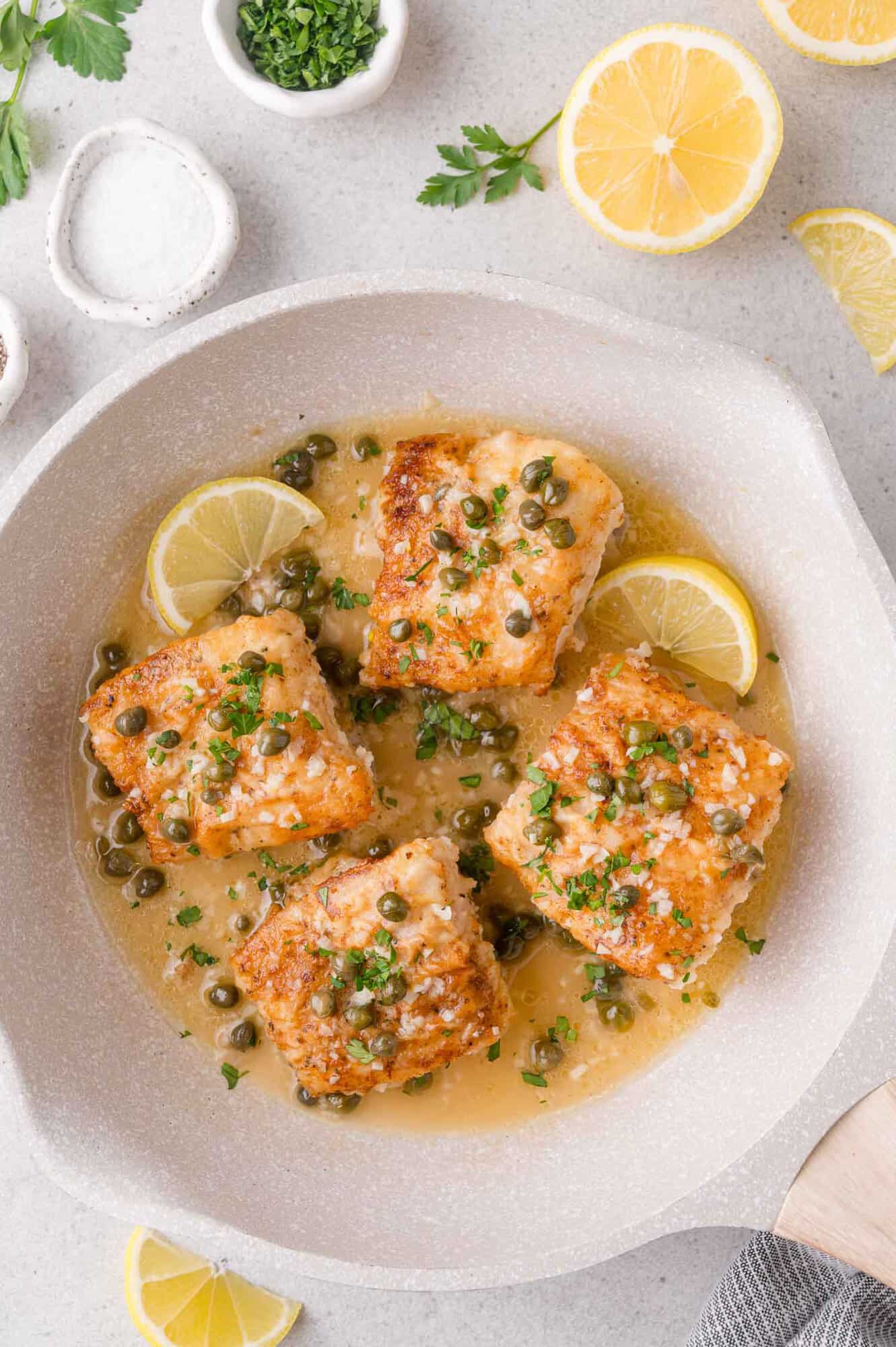
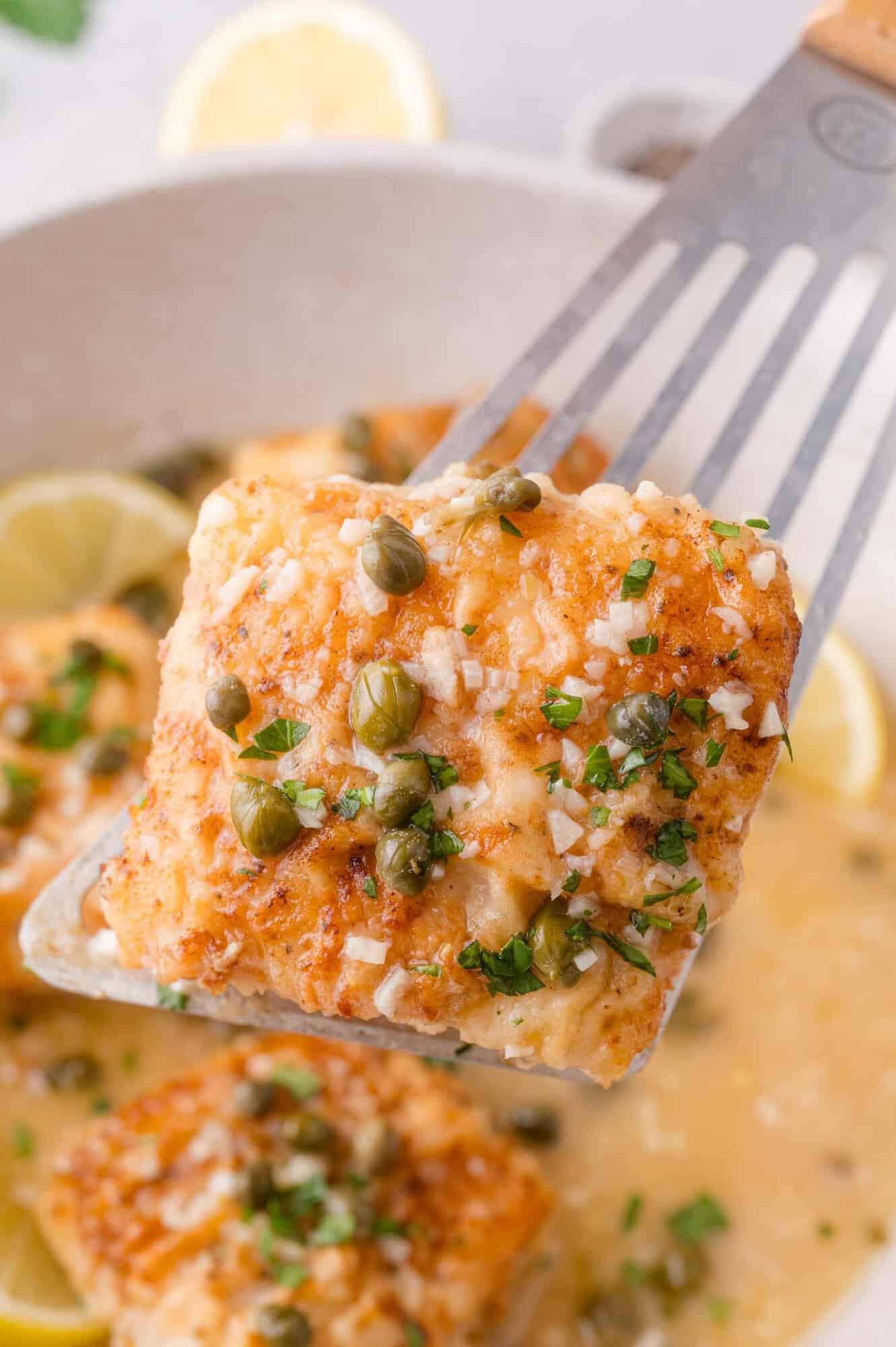
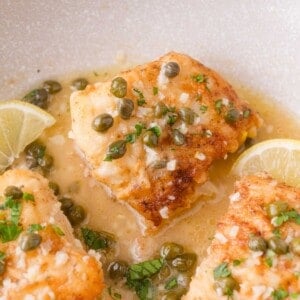
Finish and serve. Stir in the capers. Return the cod to the skillet and spoon the sauce over the fillets. Cook for about 1 minute more, just to warm the fish. Remove from heat and sprinkle with chopped parsley. Serve the cod topped with the sauce and lemon slices.
Tips for Perfect Cod Piccata
- Pat the cod dry. This is key for getting that golden crust. If the surface is still damp, the fish will steam instead of sear.
- Wipe out excess oil before making the sauce. If the pan is brown or sticky after searing the cod, you can carefully remove excess oil using paper towels and tongs before moving on. (We did this during testing and it worked well.)
- Don’t over-reduce the sauce. Piccata sauce is meant to be light and silky, not thick and heavy like a cream sauce. A short simmer is all it needs.
Serving Suggestions
- Pasta: Serve over angel hair or spaghetti to soak up the lemon butter sauce, or alongside a pasta dish with complementary flavors like fresh tomato pasta.
- Rice or quinoa: Cooked grains are another simple base to soak up those flavors! I love this Instant Pot basmati rice for its nutty flavor.
- Vegetables: I always love pairing cod piccata with asparagus (like sautéed asparagus or air fryer asparagus), but you could really go with any vegetable here. Marinated tomatoes would be fantastic too!
- Crusty bread: For a rustic dinner, serve your cod piccata with crusty no-knead bread or warm bakery rolls.
Refrigerate: Store leftover cod piccata in an airtight container for up to 2 days. (I never like freezing fish once it’s been cooked because it just doesn’t thaw and reheat well.)
Reheat: Warm gently in a skillet over low heat until just heated through. Be careful not to overcook, as fish can dry out quickly. The microwave works in short intervals, but the texture is more likely to suffer than when you use the stove.
More Seafood Recipes



Cod Piccata
Ingredients
- 4 cod fillets (about 6 ounces each, thawed if frozen)
- ½ teaspoon kosher salt
- ¼ teaspoon coarse ground black pepper
- ¼ cup all-purpose flour
- 2 tablespoons olive oil
- 2 tablespoons unsalted butter (divided)
- 3 cloves garlic, minced
- ½ cup low-sodium chicken broth
- ¼ cup freshly squeezed lemon juice (from 1 large lemon)
- 2 tablespoons capers, drained
- 2 tablespoons chopped fresh parsley
- lemon slices (for optional garnish)
Instructions
- Pat the cod fillets dry with paper towels. Season with salt and pepper, then lightly dredge the fillets in the flour, shaking off the excess.4 cod fillets, ½ teaspoon kosher salt, ¼ teaspoon coarse ground black pepper, ¼ cup all-purpose flour
- Heat the olive oil and 1 tablespoon butter in a large nonstick skillet over medium-high heat.2 tablespoons olive oil
- When hot, add the cod and cook 4 to 5 minutes per side, or until golden brown and the fish flakes easily with a fork. Cooking time may vary depending on the thickness of the fillets.
- Transfer the cod to a plate and cover loosely to keep warm. If desired, drain excess oil from the pan and wipe it clean with paper towels before continuing (see note).
- Over medium heat, add the remaining 1 tablespoon of butter and minced garlic to the skillet. Cook for 30 seconds, stirring constantly, just until fragrant.3 cloves garlic, minced
- Pour in the chicken broth and lemon juice. Simmer 2 to 3 minutes, until slightly reduced (see note).½ cup low-sodium chicken broth, ¼ cup freshly squeezed lemon juice
- Stir in the capers and return the cod to the skillet. Spoon sauce over the fillets and cook 1 minute more so the cod rewarms.2 tablespoons capers, drained
- Remove from heat, sprinkle with parsley, and serve the cod topped with the lemon caper sauce and fresh lemon slices if desired.2 tablespoons chopped fresh parsley
Notes
- Cooking sauce: I prefer to wipe out the skillet after frying the cod simply because the sauce looks more appetizing without the browned oil and crumbs left over from frying the cod. You can skip this step if you don’t want to bother.
- Blue garlic: When garlic is combined with an acidic liquid, such as lemon juice, sometimes a chemical reaction can take place, causing the bits of garlic to turn blue. This happened in our test kitchen so we did a little research. While the bluish color may be a little alarming, the garlic is perfectly safe to eat and the flavor isn’t affected at all.
- Storage & reheating: Promptly refrigerate leftover cod piccata in a covered container for up to 2 days. Reheat in a skillet over low heat until heated through (don’t overdo it or the fish may dry out), or microwave in short intervals just until heated.
Video
Nutrition
Nutrition information is automatically calculated, so should only be used as an approximation.
 Did You Make This?Share a comment and rating below! I love hearing what you think!