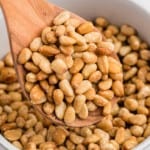
How to Toast Pine Nuts - Three Methods
Learning how to toast pine nuts is an essential skill you'll want in your cooking tool box. Choose which easy method works best for your recipe.
Servings: 8
Ingredients
- ½ cup raw pine nuts (see note)
Instructions
Stove Top Method (¼ to 1 cup):
- Place the pine nuts in a dry frying pan large enough to hold them in a single layer. Dry means you don't need to add oil or water to the pan. If you choose to add oil, be sure to use oil with a high smoke point.
- Turn the heat to medium-low and toast the pine nuts until fragrant and golden brown, stirring frequently or even constantly, especially as they begin to brown. Keep the heat low as they toast so they don't burn.
- When they're golden brown, immediately transfer them from the hot skillet to a plate to stop the cooking and prevent scorching. Nuts should be in a single layer to cool.
Microwave Method (¼ to ½ cup):
- Spread pine nuts in a single layer on a microwave-safe plate. Microwave on full power (100%) for 1 minute, stir, and then continue to microwave in 30 second intervals, stirring each time, until golden brown.
- Keep an eye on them, especially towards the end, because they can burn quickly. The microwave tends to heat unevenly so some nuts may be untoasted while others scorch if you're not watching and stirring every 30 seconds.
- Transfer to another plate to cool; arrange in a single layer.
Oven Method (2 cups or more):
- Preheat oven or toaster oven to 375ºF.
- Spread pine nuts in a single layer on a rimmed baking sheet.
- When oven is preheated, bake the pine nuts for 5 to 10 minutes, stirring every 2 to 3 minutes, or until golden brown. Watch them closely towards the end of the baking time because they scorch quickly.
- Immediately transfer to a plate to cool, in a single layer. Don't leave them in the hot pan because they will continue to brown.
Video
Notes
- Storage: After the pine nuts have completely cooled, transfer them to an airtight container or jar. Store both raw and toasted pine nuts in either the refrigerator or freezer to keep them from becoming rancid. They'll keep for up to 3 weeks in the refrigerator or 3 months in the freezer.
- Other nuts and seeds: All 3 methods described above can be used to toast other types of nuts and seeds, too. The cooking time will vary depending on the size of the nuts or seeds. For more specific instructions, see how to toast pecans, how to toast walnuts, how to toast almonds, and how to toast pepitas.
Nutrition
Serving: 1tablespoon | Calories: 57kcal | Carbohydrates: 1g | Protein: 1g | Fat: 6g | Saturated Fat: 0.4g | Polyunsaturated Fat: 3g | Monounsaturated Fat: 2g | Sodium: 0.2mg | Potassium: 50mg | Fiber: 0.3g | Sugar: 0.3g | Vitamin A: 2IU | Vitamin C: 0.1mg | Calcium: 1mg | Iron: 0.5mg
QR Code
Scan this QR code with your phone's camera to view this recipe on your mobile device.

*If you're viewing this on your phone, press and hold the QR code to open in your browser.