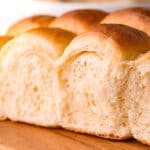
Parker House Rolls
Bake your own classic Parker House rolls, filling your kitchen with the tantalizing fragrance of yeast and butter. These homemade rolls are soft and delicious, and even a novice baker can handle this recipe.
Servings: 24
Ingredients
- 5 cups all-purpose flour
- 2 ¾ teaspoons instant yeast (you'll need 2 packets but won't use the entire amount; 1 packet contains 2 ¼ teaspoons)
- 2 teaspoons salt
- 3 large eggs
- 1 ¼ cups whole milk
- 12 tablespoons unsalted butter, divided
- 3 tablespoons granulated sugar
Instructions
- In the bowl of a stand mixer fitted with a dough hook, mix together the flour, yeast, and salt.5 cups all-purpose flour, 2 ¾ teaspoons instant yeast, 2 teaspoons salt
- In a medium bowl, lightly beat the eggs; set aside.3 large eggs
- In a medium saucepan, combine the milk, 9 tablespoons of butter, and the sugar and cook over medium-low heat until the butter melts, the sugar dissolves, and the mixture reaches a temperature between 125 and 130°F. It’s VERY important that your milk mixture is between 125 and 130°F because it needs to be hot enough to activate the yeast but not so hot that it kills the yeast.1 ¼ cups whole milk, 3 tablespoons granulated sugar
- With the mixer running on low speed, slowly add milk mixture to bowl followed by the eggs and mix until no dry flour remains, about 1 to 2 minutes.
- Increase speed to medium and knead until dough is smooth, elastic, and mostly pulls away from the sides of the bowl, about 6 to 8 minutes. The dough will still be sticky, and may stick to the bottom of the bowl.
- Turn the dough out onto a lightly floured surface and knead by hand for 30 seconds. Form dough into a tight ball and transfer to a large, greased bowl. Spray the top of the bread lightly with nonstick spray, then cover the bowl with plastic wrap.
- Let dough proof (rise) in a warm place until doubled in size, 60 to 90 minutes.
- Line a 13 x 9-inch baking pan with two pieces of foil or parchment paper, overlapping foil and letting the ends hang over the long edges of the pan. Spray the foil/paper with nonstick spray; set aside.
- Melt remaining 3 tablespoons of butter. Turn the ball of dough out onto a clean lightly floured surface and divide in half. Stretch each half into a 24-inch long roll and use a rolling pin to flatten it so it’s about 5 inches wide. Brush the surface of the dough with 1 tablespoon of melted butter.
- Starting at the top long edge, fold a third of the dough down toward you. Then fold the bottom third of the dough over to meet the folded edge. Roll dough a couple of times to seal and reshape as necessary to form an even log.
- Using a sharp knife, trim 1 inch of dough off each end and discard, then cut dough into 12 equal pieces. Arrange rolls seam side down in the prepared pan in three rows of four. Repeat with the remaining half of the dough.
- Cover the pan with plastic wrap and let the rolls proof (rise) in a warm place until they are about double in size, about 1 hour.
- Preheat the oven to 375°F and bake the rolls until browned and centers register 200°F, 30 to 35 minutes, rotating the pan halfway through.
- Transfer the rolls to a wire rack using the foil for handles. Brush with the remaining tablespoon of melted butter.
Notes
- Make classic dinner rolls: Divide the dough into even portions and shape into balls. Arrange in pan as instructed.
- Make ahead: Prepare the dough, cover the bowl tightly and refrigerate overnight. This is the first rising. The next day, form the dough into rolls, placing them into the baking pan, and let rise again. The second rise will take a bit longer since the dough is cold. Alternatively, you could do the first rise normally, form the dough into rolls, cover tightly, and refrigerate. Let the rolls rise a bit after removing from the fridge, if necessary, before baking.
- Storing baked rolls: Baked rolls that are cooled completely can be stored in an airtight bag or container for a couple of days on the counter. To freeze rolls, wrap in plastic wrap and place in a freezer bag and freeze for up to 3 months. To thaw, unwrap and let thaw at room temperature. To thaw quickly, preheat the oven to 200°F, unwrap the rolls, place on a cookie sheet, and bake for about 15 minutes.
- Using active dry yeast: If you prefer to use active dry yeast instead of instant yeast, substitute 3 ½ teaspoons of dry active yeast and add it to ⅓ cup of the milk heated to 110°F with a teaspoon of sugar. Let it activate for 10 to 20 minutes until foamy. The milk and sugar amounts will be reduced from the amounts in the ingredients, so you will still use the full amounts called for but they will be divided. The milk and butter mixture doesn’t need to be between 125 and 130F °in this case since you’re activating the yeast separately. It simply just needs to be melted and warm but not hot. Using dry active yeast will require up to an additional 30 minutes of proofing each time and will add about 1½ hours to the total prep time.
Nutrition
Serving: 1roll | Calories: 172kcal | Carbohydrates: 23g | Protein: 5g | Fat: 7g | Saturated Fat: 4g | Polyunsaturated Fat: 0.5g | Monounsaturated Fat: 2g | Trans Fat: 0.2g | Cholesterol: 40mg | Sodium: 210mg | Potassium: 70mg | Fiber: 1g | Sugar: 2g | Vitamin A: 229IU | Vitamin C: 0.004mg | Calcium: 25mg | Iron: 1mg
QR Code
Scan this QR code with your phone's camera to view this recipe on your mobile device.

*If you're viewing this on your phone, press and hold the QR code to open in your browser.